

News
When selecting an armoured power cable, the armour layer is an important consideration. It provides additional mechanical protection and helps the cable withstand demanding installation conditions such as underground, industrial and outdoor applications.
However, different types of cable armour are designed for different applications.
The three commonly used armour types are:
· SWA — Steel Wire Armour
· STA — Steel Tape Armour
· AWA — Aluminium Wire Armour
So, what is the difference between SWA, STA and AWA cables?
More importantly, which type of cable armour is suitable for your project?
In this guide, we explain the construction, characteristics, applications and key differences between SWA, STA and AWA armoured cables.
1. What Is Cable Armouring?
Cable armouring is a protective layer incorporated into a cable construction to provide additional mechanical protection.
In a typical armoured power cable, the armour is positioned around the cable cores and underneath the outer sheath.
A simplified construction can be represented as:
Conductor → Insulation → Bedding/Inner Sheath → Armour → Outer Sheath
Depending on the cable design and applicable standard, additional layers may also be included.
The armour can help protect the cable against:
· Mechanical impact
· Crushing forces
· External pressure
· Damage during installation
· Mechanical stress
· Demanding environmental conditions
Armoured power cables are commonly used for:
· Underground power distribution
· Direct burial
· Industrial facilities
· Construction projects
· Power plants
· Infrastructure projects
· Outdoor electrical installations
The correct armour type depends on the voltage level, number of cores, conductor material, installation method, applicable standard and project requirements.
2. What Is SWA Cable?
SWA stands for Steel Wire Armour.
SWA cable uses steel wires as the armour layer. Galvanized steel wires are commonly used in many cable designs.
Typical SWA Cable Construction
A simplified construction is:
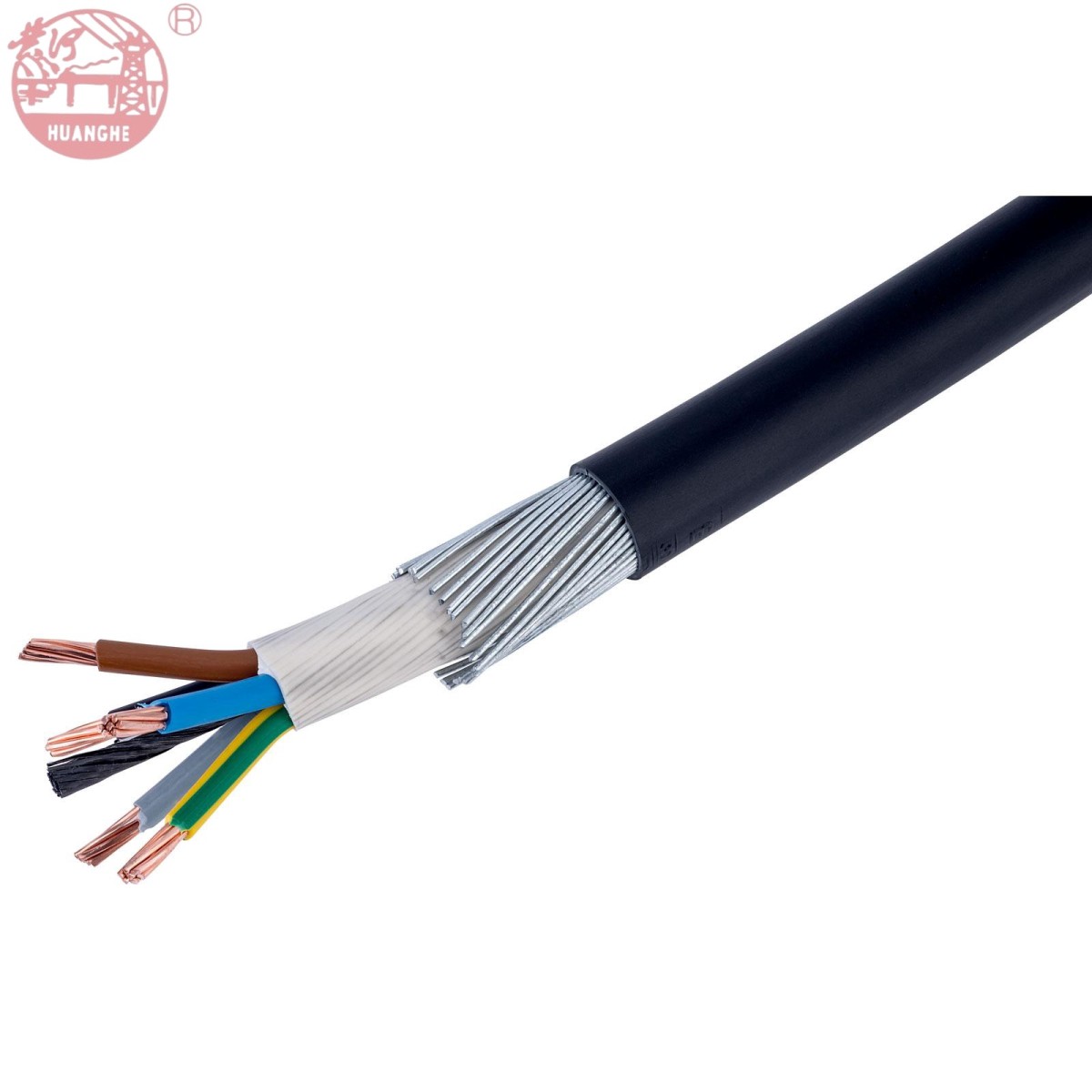
Copper Conductor → XLPE Insulation → Bedding → Steel Wire Armour → PVC Outer Sheath
Example:
Cu/XLPE/SWA/PVC
Typical construction of a steel wire armoured power cable
3. What Is STA Cable?
STA stands for Steel Tape Armour.
Instead of steel wires, STA cable uses steel tape as the armour layer.
The steel tape provides mechanical protection around the cable assembly.
Typical STA Cable Construction
A simplified construction is:
Copper Conductor → XLPE Insulation → Bedding → Steel Tape Armour → PVC Outer Sheath
Example:
Cu/XLPE/STA/PVC
The actual cable structure may vary depending on the applicable standard and project specification.
Advantages of STA Cable
Typical characteristics include:
· Effective mechanical protection
· Suitable for fixed installations
· Commonly used in multi-core cable designs
· Suitable for underground installations
· Can provide a relatively compact construction depending on the design
Typical STA Applications
STA cables may be used in:
· Low-voltage power distribution
· Underground power systems
· Industrial installations
· Building projects
· Infrastructure projects
· Fixed electrical installations
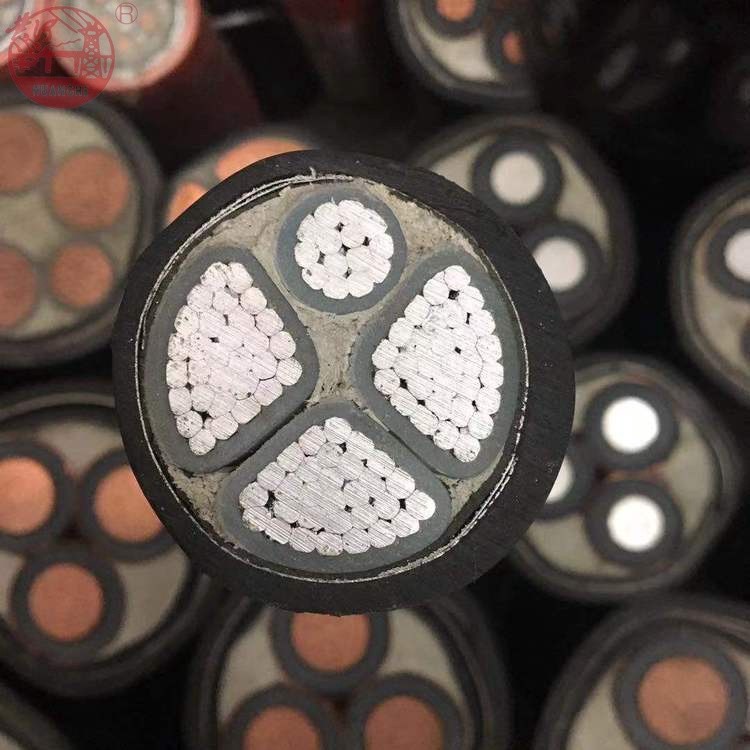
Typical construction of a steel tape armoured power cable
4. What Is AWA Cable?
AWA stands for Aluminium Wire Armour.
AWA cable uses aluminium wires as the armour layer.
It is particularly associated with single-core AC power cable applications, where a non-magnetic armour material is required.
Typical AWA Cable Construction
A simplified single-core AWA cable may include:
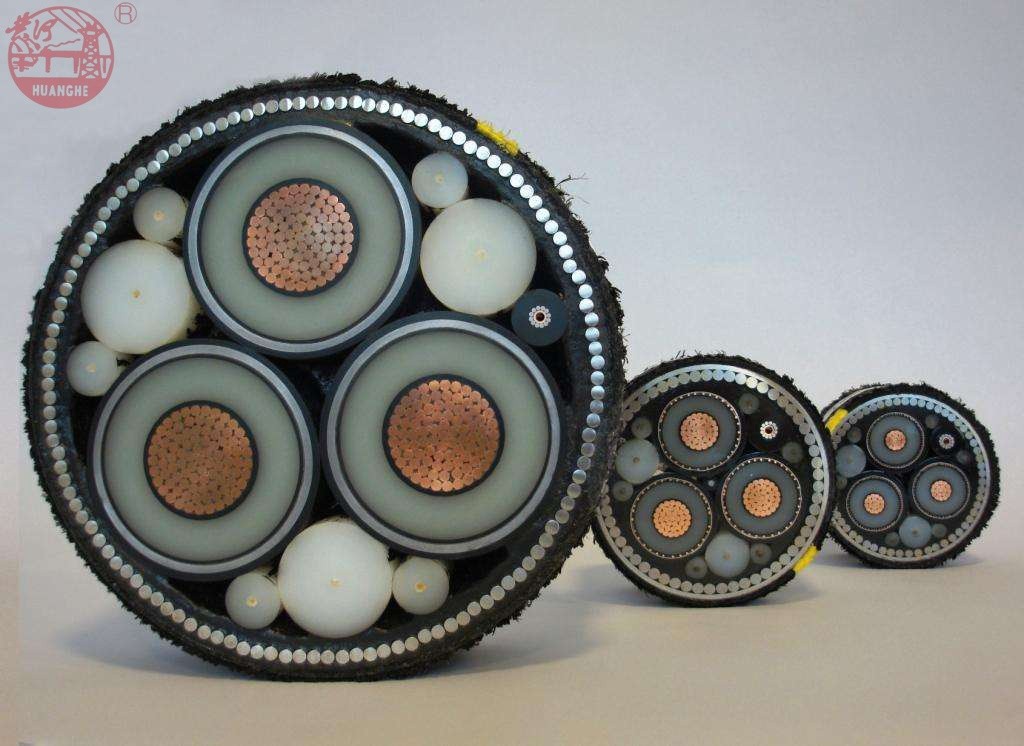
Copper Conductor → XLPE Insulation → Metallic Screen → Bedding → Aluminium Wire Armour → Outer Sheath
Example:
Cu/XLPE/AWA/PVC
For medium- and high-voltage cables, additional layers such as conductor screens, insulation screens, metallic screens and water-blocking components may be required.
Why Is Aluminium Used?
A single-core AC cable produces an alternating magnetic field around the conductor.
Because steel is magnetic, conventional steel armour around a single-core AC cable can produce electromagnetic effects and additional losses.
Aluminium is non-magnetic.
Therefore, aluminium wire armour is commonly used for suitable single-core AC cable designs.
This is one of the most important reasons why AWA is commonly associated with single-core AC power cables.
Typical AWA Applications
AWA cables are commonly considered for:
· Single-core AC power cables
· Medium-voltage cables
· High-voltage cable systems
· Underground power distribution
· Industrial power systems
Typical aluminium wire armour construction for a single-core AC power cable
5. SWA vs STA vs AWA: Key Differences
The main difference between these three cable armour types is the armour material and construction.
*Actual performance depends on cable design, armour dimensions, materials, applicable standard and installation conditions.
Quick Selection Guide
Choose SWA when:
You need a robust steel wire armoured construction, particularly for multi-core power cables and demanding installations.
Choose STA when:
The project requires steel tape armour for a fixed-installation cable design.
Choose AWA when:
You are designing a single-core AC power cable and require a non-magnetic armour solution.
Important: The final armour selection should always be confirmed against the applicable cable standard and project specification.
6. SWA vs STA: Which One Should You Choose?
SWA and STA both provide mechanical protection, but they use different armour constructions.
SWA — Steel Wire Armour
SWA may be preferred when:
· High mechanical protection is required
· A multi-core power cable is being used
· The installation environment is demanding
· Steel wire armour is specified by the project
· The applicable standard allows or requires wire armour
STA — Steel Tape Armour
STA may be preferred when:
· Steel tape armour is specified
· The cable is intended for fixed installation
· A tape armour construction is required by the applicable standard
· A relatively compact armour arrangement is appropriate
There is no universal answer that SWA is always better than STA.
The correct choice depends on the complete cable design and project requirements.
7. Why Is AWA Used for Single-Core AC Cables?
This is one of the most frequently asked questions about cable armouring.
When AC current flows through a single conductor, it produces an alternating magnetic field.
If a magnetic steel armour surrounds the conductor, electromagnetic effects can cause additional losses.
For this reason, a non-magnetic armour material such as aluminium is commonly used in suitable single-core AC cable designs.
Simple Rule of Thumb
Single-core AC cable
→ Consider AWA or another suitable non-magnetic armour solution.
Multi-core power cable
→ SWA or STA may be suitable depending on the design and standard.
However, this should be treated as a general selection principle rather than a substitute for proper cable engineering.
8. Common Armoured Cable Constructions
Low-Voltage SWA Cable
Typical simplified construction:
Cu/XLPE/SWA/PVC
Typical voltage:
0.6/1 kV
Applications:
Industrial distribution, underground installations and infrastructure projects.
Low-Voltage STA Cable
Typical simplified construction:
Cu/XLPE/STA/PVC
Typical voltage:
0.6/1 kV
Applications:
Underground distribution and fixed industrial installations.
Single-Core AWA Cable
Typical simplified construction:
Cu/XLPE/AWA/PVC
For medium- and high-voltage applications, the actual structure may include metallic screens and other functional layers.
Applications:
Single-core AC transmission and distribution systems.
9. How to Choose the Right Armoured Cable
Before requesting a quotation, provide the following information to the cable manufacturer.
1. Conductor Material
· Copper
· Aluminium
2. Number of Cores
For example:
· 1 core
· 2 cores
· 3 cores
· 4 cores
· 5 cores
3. Conductor Size
For example:
· 35 mm²
· 70 mm²
· 120 mm²
· 240 mm²
4. Rated Voltage
For example:
· 0.6/1 kV
· 3.6/6 kV
· 6/10 kV
· 8.7/15 kV
· 12/20 kV
5. Insulation
Common options include:
· XLPE
· PVC
· EPR
6. Armour
Specify whether you require:
· SWA
· STA
· AWA
7. Outer Sheath
Common options include:
· PVC
· PE
· HDPE
· LSZH
8. Installation Method
For example:
· Direct burial
· Underground duct
· Cable tray
· Outdoor installation
· Industrial installation
The more complete the specification, the easier it is for the manufacturer to recommend the appropriate cable construction and provide an accurate quotation.
10. Other Factors to Consider
Armour selection should not be based only on mechanical protection.
Other important factors include:
Voltage Level
Medium- and high-voltage cables may require additional electrical screening layers.
Number of Cores
Single-core and multi-core cables may require different armour solutions.
Installation Conditions
Consider:
· Direct burial
· Cable tray
· Duct
· Indoor installation
· Outdoor installation
· Industrial environments
Applicable Standard
The cable should be designed according to the required standard, such as:
· IEC
· BS
· UL
· GB
· Other project-specific standards
Fire Performance
Depending on the application, the cable may also require:
· Flame-retardant performance
· Low smoke emission
· Halogen-free construction
· Fire-resistant performance
These requirements can affect the insulation, bedding and outer sheath materials.
11. Frequently Asked Questions About SWA, STA and AWA
Is SWA better than STA?
Not necessarily.
SWA and STA use different armour constructions. The appropriate option depends on the cable design, applicable standard, installation conditions and project requirements.
What is the main difference between SWA and STA?
SWA uses steel wires, while STA uses steel tape as the armour layer.
Both can provide mechanical protection, but their construction and application may differ.
What is the difference between SWA and AWA?
SWA uses steel wire armour, while AWA uses aluminium wire armour.
The most important difference is that aluminium is non-magnetic, making AWA a common armour solution for suitable single-core AC cable designs.
Why is AWA used for single-core AC cables?
AWA is made from aluminium, which is non-magnetic. This helps avoid the electromagnetic effects associated with conventional magnetic steel armour around single-core AC conductors.
Can SWA be used on a single-core AC cable?
Conventional magnetic steel armour is generally not preferred for single-core AC applications because it can introduce additional electromagnetic effects and losses.
A suitable non-magnetic armour solution, such as AWA, is commonly considered.
Can STA be used for single-core cables?
The suitability of STA for a single-core cable depends on the cable design, installation arrangement and applicable standard. Conventional magnetic steel armour is generally not the preferred solution for single-core AC cables.
Are SWA cables suitable for underground installation?
SWA cables are commonly used in underground applications. However, suitability for direct burial depends on the complete cable construction, outer sheath, environmental conditions and applicable standard.
Are STA cables suitable for direct burial?
STA cables can be used in underground applications where the complete cable design and applicable standard permit it. Direct-burial suitability should always be confirmed for the specific cable construction.
What cable armour should I choose?
As a general starting point:
Multi-core power cable: SWA or STA may be suitable.
Single-core AC power cable: AWA or another suitable non-magnetic armour solution is commonly considered.
The final selection should be based on the project specification and applicable cable standard.
Does armouring replace the cable's electrical screen?
No.
Cable armour and electrical screening perform different functions. In medium- and high-voltage cables, metallic screens may be required for electrical and fault-current purposes, while the armour primarily provides mechanical protection.
The exact construction depends on the cable standard and design.
12. SWA, STA or AWA: Which Cable Is Right for Your Project?
There is no single armour type that is best for every application.
The right choice depends on:
· Cable voltage
· Number of cores
· Conductor material
· Conductor cross-section
· Installation method
· Mechanical protection requirements
· Electrical requirements
· Applicable standards
· Environmental conditions
Project specifications
Quick Reference
SWA — Steel Wire Armour
Best known for robust multi-core armoured power cable applications.
STA — Steel Tape Armour
Commonly used for fixed-installation power cables where steel tape armour is specified.
AWA — Aluminium Wire Armour
Commonly used for suitable single-core AC power cables where non-magnetic armour is required.
13. Request a Cable Recommendation and Quotation
Choosing the correct armoured cable can be challenging when project specifications involve different voltage levels, conductor sizes, installation methods and international standards.
HUANGHE CABLE GROUP provides customized cable solutions for industrial, infrastructure, power distribution and other electrical projects.
To help us recommend the appropriate cable construction, please send us:
· Cable type
· Rated voltage
· Number of cores
· Conductor material
· Conductor size
· Insulation material
· Armour requirement
· Outer sheath requirement
· Applicable standard
· Installation method
· Required quantity
· Destination country or port, if quotation is required
Need a Customized Armoured Cable?
Send us your cable specification or project requirements. Our technical team can review the construction and recommend a suitable SWA, STA or AWA cable solution for your application.
Contact HUANGHE CABLE GROUP today for technical support and a competitive quotation.