

News
Overview of Core Differences
Both YC and YZ are rubber-sheathed cables, but they differ significantly in design positioning and performance characteristics. YC belongs to the heavy-duty general-purpose rubber-sheathed category, suitable for environments with high mechanical stress; YZ, on the other hand, is a medium-duty rubber-sheathed cable, emphasizing flexibility and applications in medium-load scenarios. The two types are distinctly differentiated in voltage levels, mechanical performance, conductor specifications, and applicable environments.
Voltage level difference
The YC cable has a rated voltage of 450/750V and is suitable for higher voltage environments
The YZ cable has a rated voltage of 300/500V and is suitable for low-voltage applications
Mechanical Properties Comparison
The YC cable has a relatively thick sheath, capable of withstanding significant mechanical external forces
The YZ cable sheath is relatively thin and has weaker resistance to mechanical external forces
Differences in Conductor Specifications
The cross-sectional area of YC cable conductors is relatively large, typically 10mm² or larger
The YZ cable conductor has a relatively small cross-sectional area, primarily ranging from 0.75mm² to 6mm²
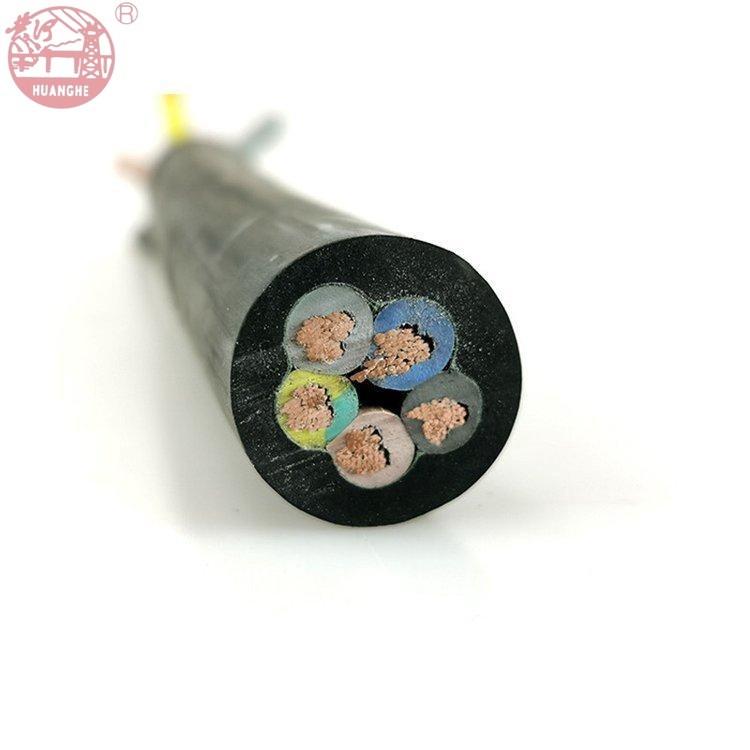
Technical Parameters Comparison
Current-carrying capacity difference
Under the same cross-sectional area, the current-carrying capacity of YC cables is 25%-31% higher than that of YZ cables
The larger the cross-sectional area, the more pronounced the absolute difference in current-carrying capacity between the two
YC cables exhibit superior heat dissipation performance, allowing higher continuous operating currents
structural characteristics
The YC cable conductor is made of stranded thick copper wires, offering high mechanical strength
The YZ cable conductor is made of medium-thick copper wire, offering better flexibility The YC cable sheath adopts highly conductive neoprene rubber, offering superior heat dissipation efficiency
Temperature tolerance
The long-term allowable operating temperature for both types of cables does not exceed 60°C
YC cables exhibit superior sheath temperature control under the same current
Scenario Analysis
Heavy Equipment Applications
YC cables are suitable for port machinery, searchlights, and large-scale water conservancy drainage stations
Capable of withstanding mechanical stresses such as crushing and dragging
Suitable for heavy machinery with a power rating exceeding 27kW
Medium load scenario
YZ cables are suitable for agricultural electrification and power tool connections
Suitable for small and medium-sized equipment with a power rating of less than 27 kW
Commonly used in scenarios such as temporary lighting and small water pumps
Special Environmental Adaptability
YC cables are more suitable for harsh outdoor environments, being resistant to oil stains and wear
YZ cables are suitable for damp or oily environments but offer weaker mechanical protection
Both types of cables exhibit excellent weather resistance and bending characteristics
Selection Suggestions
Power matching principle
For equipment with a power rating of ≤27kW, YZ cables are preferred
For equipment with a power rating exceeding 27kW, YC cables must be selected
Avoid using YZ cables as a substitute for YC connections when linking high-power equipment
Cost-benefit consideration
YZ cables use less material and offer higher cost performance
YC cables offer superior performance but are relatively expensive
Balance performance and cost based on actual needs
Strictly prohibit overloading to prevent cable overheating
Pay attention to the operating temperature limits to prevent insulation aging
Select qualified products that meet the standards