
News
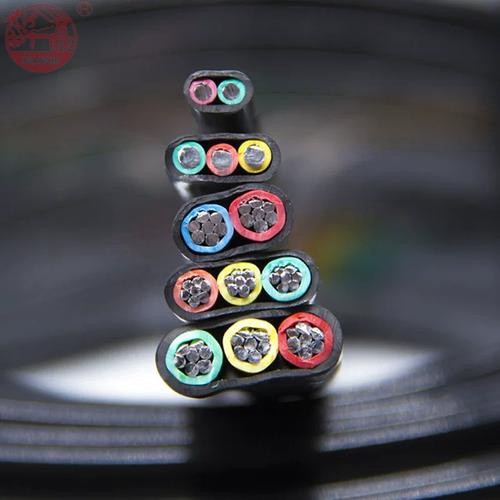
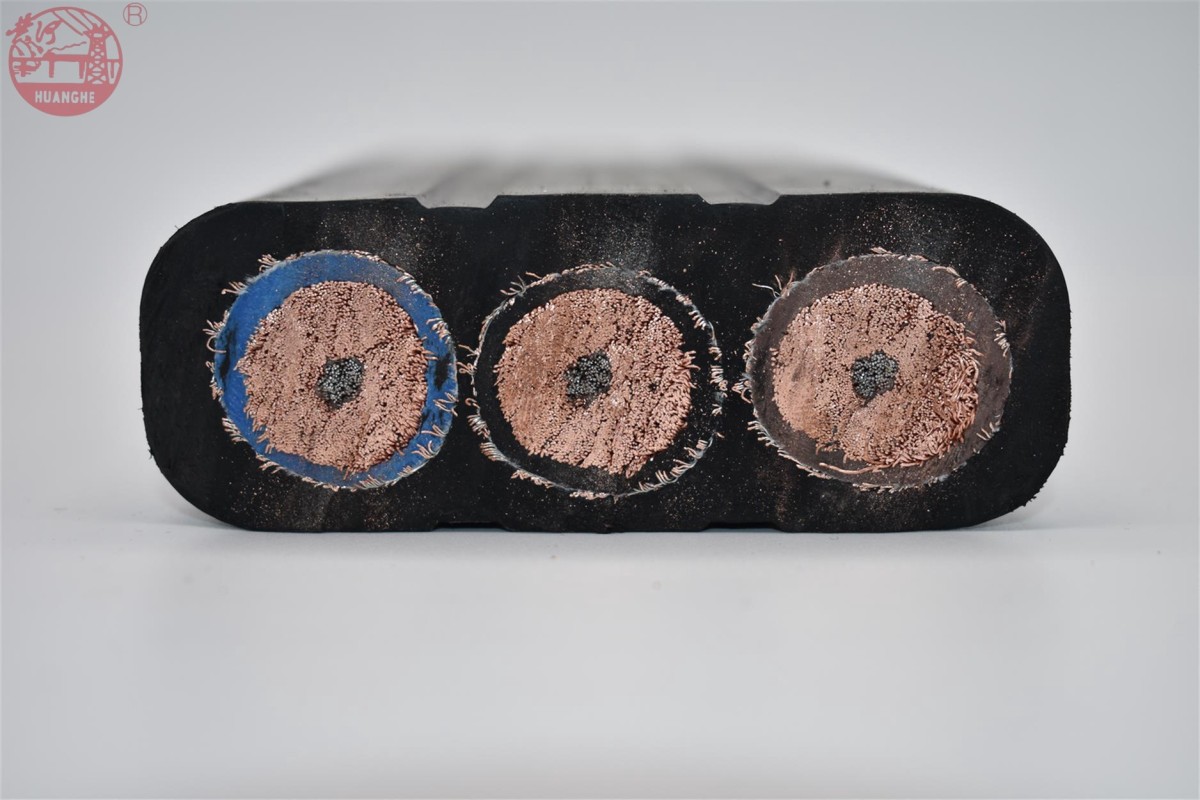
Flat cable (flat cable) is a flat cable composed of multiple parallel conductors, featuring heat resistance, cold resistance, and acid and alkali resistance. It operates within a voltage range of 450/750V to 0.6/1kV and is suitable for ambient temperatures of -40 to +70°C. The conductors are designed with a soft structure, and the insulation layer uses nitrile composite or silicone rubber materials. The sheath can be made of polyurethane, PVC, or silicone rubber, with some models optionally incorporating load-bearing elements such as galvanized steel wire ropes on both sides of the conductors.
The minimum bending radius of this cable is 8-12 times the thickness of its minor side, with the required bending radius varying depending on the installation method (fixed/movable). The flat structure facilitates wiring in mobile equipment across industries such as metallurgy, power, petrochemicals, and automotive manufacturing, making it suitable for scenarios like cranes, automated warehousing, and port machinery for trailing power supply and signal control. The insulation layer can be removed via low-temperature peeling or heated scraper blade methods, with flame-retardant performance compliant with GB/T18380 standards. Some models are certified by CCC and CE.
Usage environment
Flat cables are used for power connections and control signals in various mobile power devices across industries such as lifting, transportation, machinery, electrical, mining, and others, operating at voltages of 450/750V or below and in ambient temperatures ranging from -40°C to 70°C. The insulation and sheathing are made of nitrile composite material, which enhances cable flexibility, corrosion resistance, and low-temperature performance.
structural characteristics
(1) Flat cables are used for power transmission lines or connecting cables in mobile electrical appliances. The product features heat and radiation resistance, cold resistance, resistance to acids, alkalis, and corrosive gases, as well as waterproofing. The cable structure is flexible, radiation is convenient, and the electrical performance remains stable in high-temperature (or low-temperature) environments. It boasts outstanding anti-aging properties, a long service life, and is widely used in industries such as metallurgy, power, petrochemicals, electronics, and automotive manufacturing.
(2) The conductive core adopts a soft structure to ensure excellent flexibility of the cable.
(3) The insulation and protective layer materials are made of polybutadiene, enhancing the cable's flexibility, corrosion resistance, and low-temperature performance.
(4) The insulation cores are color-coded to facilitate installation and laying.
(5) Steel cables or other load-bearing components can be added on both sides of the cable core as per customer requirements.
Main performance
The main performance complies with (Q/ZB 01-2005)
Rated working voltage of the cable: AC 450/750V and below.
(2) Cable operating temperature range: -40°C to 70°C.
(3) Minimum bending radius of the cable: 10 times the thickness of the cable's minor side.
(4) The finished cable cores shall withstand an AC test voltage of 50Hz and 2.5kV for 5 minutes without breakdown.
(5) Minimum tensile strength of insulation and sheath: 10N/mm², minimum elongation at break 150%, no cracks when wound at -40°C, minimum elongation 20% when stretched at -40°C.