

News
Rubber sheathed cable is a common type of wire and cable, named after its outer sheath made of rubber or similar elastic material. This sheath endows the cable with a unique set of physical and electrical properties, making it irreplaceable in numerous industrial and civilian applications. This article will systematically analyze the performance advantages and typical application scenarios of rubber sheathed cables, and provide a practical purchasing guide.
The core of rubber sheathed cables lies in their sheath material. Usually, this sheath is made of materials such as natural rubber, styrene butadiene rubber, chloroprene rubber, or chlorinated polyethylene. The different rubber formulations determine the ultimate performance focus of the cable, such as oil resistance, weather resistance, flame retardancy, or mechanical impact resistance.
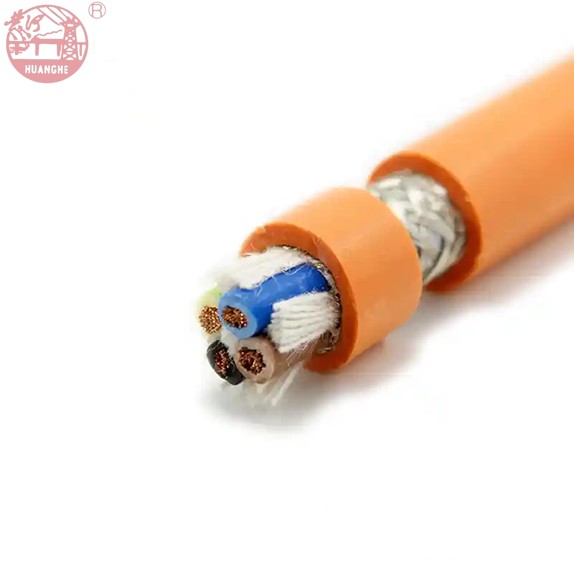
Main performance advantages of rubber sheathed cables
1. Excellent flexibility and elasticity: This is one of the most prominent features of rubber sheathed cables. The rubber sheath itself has good ductility and resilience, allowing the cable to withstand frequent bending, twisting, winding, and movement without being prone to sheath cracking or internal conductor damage. This feature is crucial for mobile devices, drag chain systems, or situations that require repeated retraction.
2. Powerful mechanical protection capability: The rubber sheath has a tough texture and can effectively resist compression, friction, impact, and slight scratching. It provides a physical barrier for the internal insulation layer and conductor, reducing the risk of cable damage, short circuit or leakage caused by external mechanical forces, and extending the service life of the cable.
3. Wide adaptability: Through a special rubber formula, rubber sheathed cables can have various environmental tolerances. For example, some rubber sheathed cables have good oil resistance and can work stably in environments exposed to grease; Some have excellent weather resistance, can resist UV and ozone erosion, and adapt to outdoor sun and rain environments; Some can maintain stable performance over a wide temperature range.
4. Good electrical insulation and safety characteristics: High quality rubber materials themselves are good insulators. The rubber sleeve and the internal insulation layer together form a dual electrical protection, improving the safety of use. Some rubber sheathed cables are made of flame-retardant rubber materials, which can prevent the spread of flames under certain conditions and enhance fire safety.
5. Moisture resistance and certain chemical resistance: The dense rubber sheath can effectively prevent moisture infiltration and protect the internal conductor from moisture erosion. For some common weak acids, weak bases, or chemical solvents, rubber sleeves with specific formulas also exhibit a certain degree of resistance.
Typical application scenarios of rubber sheathed cables
Based on the above performance advantages, rubber sheathed cables are widely used in fields that require flexibility, durability, and environmental adaptability.
1. Mobile devices and tools: This is the most common application scenario. For example, various handheld electric tools (drills, angle grinders), welding equipment, connecting cables for stage lighting and sound systems, as well as mobile power supply parts for agricultural and mining machinery, all extensively use rubber sheathed cables. It can bend with the movement of the device and is not easily damaged by fatigue.
2. Industrial automation and equipment connection: In automated production lines, robots, CNC machine tools and other equipment, especially those units with drag chains, slides or frequent movements, high flexibility rubber sheathed cables are standard configuration. It can withstand the mechanical stress caused by high-speed reciprocating motion.
3. Outdoor and harsh environment power supply: Heavy rubber sheathed cables are often used for temporary or fixed power supply lines in construction sites, open-pit mines, ports, docks, and other places. Its characteristics of wear resistance, UV resistance, and rain resistance are suitable for complex outdoor conditions. The power cords for garden tools and outdoor water pumps are often of this type.
4. Special operation occasions: Rubber sheathed cables with special properties such as oil resistance, corrosion resistance, and flame retardancy need to be used in ships, offshore platforms, and certain chemical sites. The accompanying cables of lifting equipment and elevators also have high requirements for flexibility and strength.
5. Household extension cords and specific appliances: Some high-power household appliances (such as air conditioners) and outdoor extension cords that require high safety and durability also use rubber sheaths, which have better hand feel and tensile strength than ordinary plastic sheathed wires.
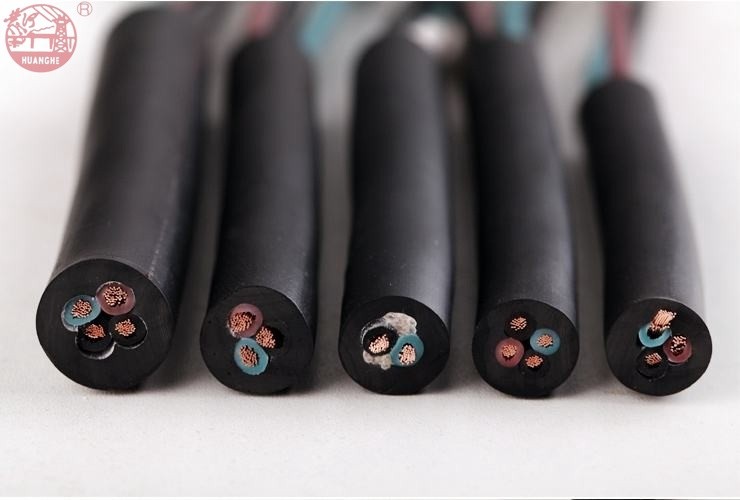
Guide to purchasing rubber sheathed cables
Choosing the appropriate rubber sheathed cable is crucial for ensuring the normal operation of equipment and personal and property safety. When making a purchase, you can consider the following aspects:
1. Clearly define usage requirements and environment
*Mobility and bending frequency: Determine whether the cable is fixedly laid or requires frequent movement and bending. For mobile or curved applications, specially designed high flexibility rubber sheathed cables should be selected, whose conductors are usually made up of multiple strands of thin copper wire twisted together.
*Environmental factors: Consider the environment in which the cable will be exposed. Outdoor use should pay attention to weather resistance (UV resistance, high and low temperature resistance); Oil resistant rubber sleeves should be selected for environments where oil stains may exist; In humid and wet environments, it is required that the protective sheath has good moisture-proof sealing properties; In situations where there is potential mechanical impact, it is necessary to choose a thicker protective sheath and an impact resistant model.
*Special requirements: Whether safety features such as flame retardancy, halogen-free low smoke (reducing toxic smoke in case of fire) are required.
2. Carefully inspect the cable identification and structure
*Conductor specification: Determine the appropriate cross-sectional area of the conductor (usually expressed in square millimeters) based on the power of the load equipment. A small cross-sectional area can cause cable overheating and pose a safety hazard. You can refer to the electrician manual or consult professionals for calculations.
*Voltage level: Confirm whether the rated voltage of the cable (such as 300/500V, 450/750V) meets the circuit requirements and must not be lower than the actual circuit voltage.
*Certification mark: When purchasing, check whether there are clear and continuous markings on the cable sheath, including specifications, voltage levels, manufacturers, certification marks, etc. Cables that comply with relevant national product standards are the basic guarantee of safety.
*Structural observation: A small sample can be taken for observation. The sheath thickness of high-quality rubber sheathed cables is uniform, the texture is tight and elastic, and it is tightly adhered to the internal insulation layer and not easy to peel off. Conductors should have good luster, softness, and a large number of strands.
3. Identify materials and processes
*Sheath material: Different rubbers have different hand feel and performance. For example, high-quality rubber has a flexible and elastic feel, with fast rebound; Poor quality recycled rubber may feel stiff, have poor elasticity, and have a pungent odor. For important purposes, material specifications can be requested from suppliers.
*Process quality: Check whether the outer diameter of the cable is uniform, whether the surface of the sheath is smooth and flat, without particles, bubbles or obvious bumps and depressions. Repeatedly bend the sample several times and observe whether there are cracks or white marks on the sheath.
4. Prioritize safety and compliance
*Do not only pursue low prices while neglecting safety. Cables with prices far below market levels are likely to have cut corners in materials (such as using inferior recycled copper, recycled rubber), cross-sectional area, or craftsmanship.
*For household or conventional industrial use, choosing reputable and fully labeled branded products is more reliable.
*For complex or special application scenarios (such as chemical, mining, and shipbuilding), the corresponding model of rubber sheathed cable should be strictly selected according to the design specifications of the industry or consulted with professional electrical engineers.
Rubber sheathed cables play an important role in the fields of power transmission and signal control due to their unique flexibility, durability, and environmental adaptability. Understanding its performance characteristics, combined with specific application scenarios and strict selection criteria, can select safe, applicable, and durable cable products, providing reliable guarantees for the stable operation of various electrical equipment and systems. In actual purchase and use, safety and compliance should always be given top priority.