

News
Introduction: Why Source 11kV Cables from China?
For power distribution projects, industrial facilities, substations and infrastructure developments, selecting a reliable 11kV medium voltage cable supplier is an important purchasing decision.
As electricity demand continues to grow across Asia, Africa, the Middle East and other developing markets, the demand for dependable medium voltage power cables is increasing.
China has become an important global manufacturing and sourcing destination for 11kV XLPE power cables. Its established cable manufacturing industry offers a broad range of conductor materials, insulation systems, armouring configurations and customized cable constructions for international projects.
However, purchasing directly from China involves more than finding the lowest quotation.
Buyers need to evaluate a manufacturer's production capabilities, technical expertise, quality management systems, product testing procedures, export experience and ability to meet project specifications.
A supplier may offer an attractive price but still fail to meet the required cable construction, testing documentation or delivery schedule.
So, how can international buyers identify a reliable 11kV cable manufacturer in China?
In this guide, Huanghe Cable Group explains what buyers should know before sourcing 11kV cables, including cable specifications, international standards, manufacturer evaluation, pricing factors, production lead times, shipping arrangements and purchasing procedures.
Whether you are an EPC contractor, electrical distributor, utility procurement manager or cable importer, this guide will help you make more informed sourcing decisions.
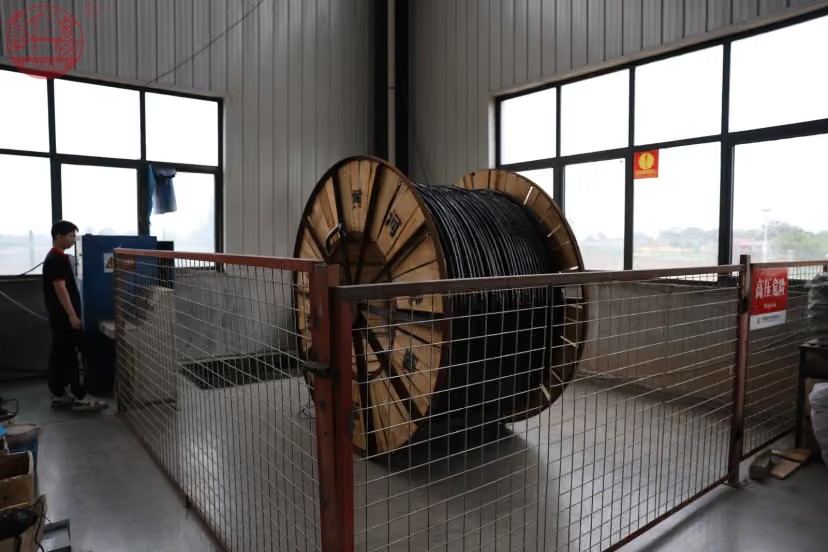
Finished 11kV XLPE medium voltage power cable drums at Huanghe Cable Group's manufacturing facility in China.
1. Why Choose China for 11kV Cable Manufacturing?
China has developed a large and diverse cable manufacturing industry serving domestic infrastructure projects and international markets.
For overseas buyers, sourcing from Chinese manufacturers can offer several practical advantages.
1.1 Wide Range of Manufacturing Capabilities
Established Chinese cable manufacturers produce different types of medium voltage power cables, including:
·6/10 kV power cables.
·6.35/11 (12) kV XLPE cables.
·8.7/15 (17.5) kV power cables.
·12/20 (24) kV power cables.
·18/30 (36) kV power cables.
Depending on the manufacturer's production capabilities, buyers can specify copper or aluminium conductors, single-core or three-core constructions, different metallic screening arrangements and various outer sheath materials.
This flexibility is particularly useful for EPC projects with different technical requirements.
1.2 Competitive Factory-Direct Purchasing
Purchasing directly from a manufacturer can simplify communication and reduce the number of commercial intermediaries.
The final quotation generally depends on:
·Copper or aluminium market prices.
·Conductor cross-sectional area.
·Cable construction.
·Insulation and sheath materials.
·Armouring requirements.
·Order quantity.
·Production scheduling.
·Shipping arrangements.
Factory-direct purchasing also allows buyers to communicate technical requirements directly with the manufacturing team.
1.3 Customized Cable Solutions
Not every project uses the same cable construction.
Some customers require aluminium conductor XLPE cables with steel wire armouring, while others specify copper conductors, copper wire screens and MDPE outer sheaths for underground applications.
An experienced manufacturer should be able to review these requirements and confirm whether the proposed design can be produced in accordance with the relevant standard.
1.4 International Export Experience
International cable procurement requires more than manufacturing.
Suppliers must understand export packaging, cable drum dimensions, shipping arrangements and destination-specific documentation.
Experienced exporters can help buyers coordinate these requirements from quotation through shipment.
2. Types of 11kV Cables Available from Chinese Manufacturers
Before contacting manufacturers, buyers should understand the main types of 11kV cables available in the market.
The correct cable selection depends on the electrical system, installation environment and project specification.
2.1 11kV Copper Conductor XLPE Cable
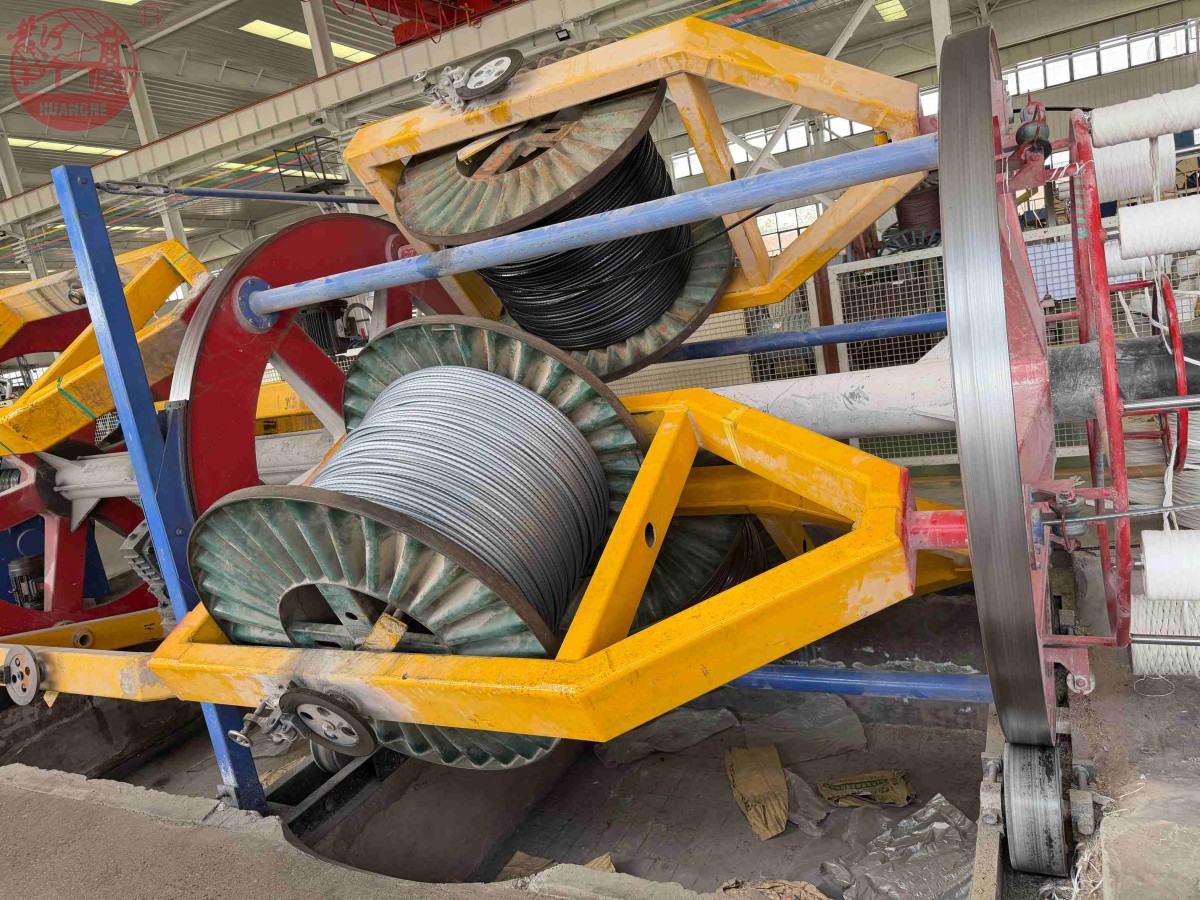
Copper conductor stranding equipment used in medium voltage XLPE cable manufacturing.
Copper conductor cables are widely used in industrial power distribution, substations and commercial infrastructure.
Their main characteristics include:
·High electrical conductivity.
·Good mechanical properties.
·Smaller conductor cross-section for comparable electrical resistance.
·Suitability for demanding electrical applications.
Copper cables are generally more expensive than comparable aluminium conductor designs because of the higher cost of copper.
2.2 11kV Aluminium Conductor XLPE Cable
Aluminium conductor cables are commonly selected for utility distribution networks and infrastructure projects.
Advantages include:
·Lower conductor weight.
·Generally lower conductor material cost.
·Suitable electrical performance when correctly sized.
·Practical transportation and installation characteristics.
Aluminium conductors usually require a larger cross-sectional area than copper conductors for comparable electrical resistance.
2.3 11kV Single-Core Cable
Single-core 11kV cables contain one conductor per cable.
They are commonly used in medium voltage systems where three separate phase cables are installed.
Typical applications include substations, industrial facilities and underground power distribution networks.
2.4 11kV Three-Core Cable
Three-core cables contain three insulated conductors within one cable assembly.
They are often selected for underground distribution and industrial power supply projects.
Common configurations include:
·3 × 50 mm².
·3 × 95 mm².
·3 × 120 mm².
·3 × 150 mm².
·3 × 185 mm².
·3 × 240 mm².
·3 × 300 mm².
The final conductor size must be determined through electrical and installation calculations.
2.5 Armoured and Unarmoured 11kV Cables
Depending on installation requirements, 11kV cables can be supplied with different mechanical protection systems.
SWA – Steel Wire Armoured
Steel wire armouring provides mechanical protection and is commonly used in underground and industrial cable installations.
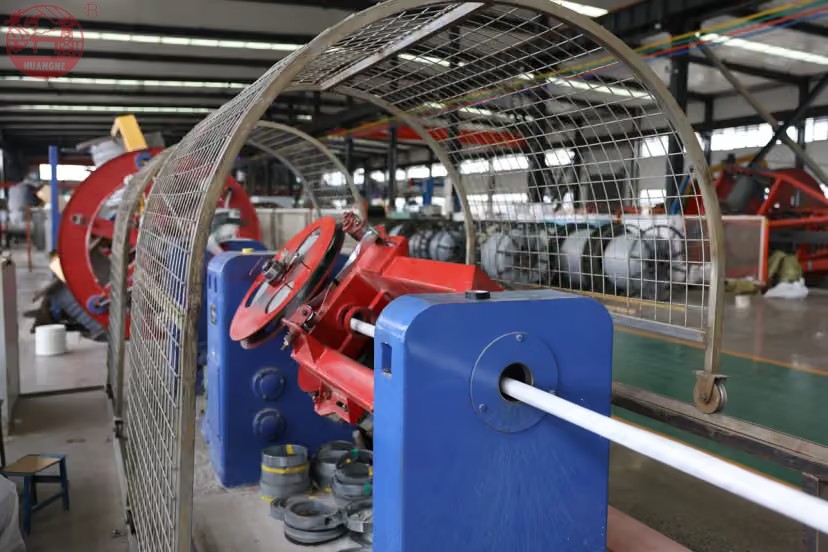
Steel wire armouring production machine for 11kV medium voltage XLPE power cables.
STA – Steel Tape Armoured
Steel tape armouring uses steel tapes wrapped around the cable assembly. It can be selected for cable designs where this construction is permitted by the applicable specification.
Unarmoured Cable
Unarmoured cables are suitable for installations where sufficient external mechanical protection is provided.
Buyers should always confirm the required construction with the project engineer or cable manufacturer.
3. Technical Specifications Buyers Must Check Before Ordering 11kV Cables
Technical specification verification is one of the most important stages of international cable procurement.
Before comparing supplier quotations, buyers should ensure that all manufacturers are quoting against the same cable design.
3.1 Rated Voltage
A commonly specified 11kV cable voltage designation under IEC 60502-2 is:
6.35/11 (12) kV
Confirm the system voltage and applicable insulation level before requesting quotations.
3.2 Conductor Material and Cross-Sectional Area
The conductor can be copper or aluminium.
Common sizes include 35, 50, 70, 95, 120, 150, 185, 240 and 300 mm².
The selection depends on load current, voltage drop, short-circuit withstand requirements and installation conditions.
3.3 Insulation Material
XLPE (Cross-Linked Polyethylene) is commonly used in medium voltage cables.
For 6.35/11 (12) kV cables designed according to IEC 60502-2, the nominal XLPE insulation thickness is 3.4 mm.
3.4 Metallic Screening
The metallic screen provides an electrical path for earth-fault current.
Common configurations include:
·Copper wire screen.
·Copper tape screen.
·Combined copper wire and tape screen.
The required screen cross-section should be calculated according to the system fault-current level and clearing time.
3.5 Armouring and Outer Sheath
The armouring and outer sheath should be selected according to installation conditions.
3.6 Cable Size, Diameter and Weight Reference
When evaluating quotations, buyers should also compare cable dimensions and estimated weights.
The following reference table covers commonly used three-core 11kV XLPE/SWA cables.
Reference design basis:
·Voltage: 6.35/11 (12) kV.
·Conductor: IEC 60228 Class 2.
·XLPE insulation: 3.4 mm.
·Copper metallic screen.
·Galvanised steel wire armour.
·PVC outer sheath.
Copper Conductor Cable
Aluminium Conductor Cable
Technical Note: These are indicative reference values, not guaranteed manufacturer dimensions or measured production results. Actual diameter and weight depend on the conductor design, screen, armour and sheath construction. Always request the manufacturer's datasheet for the exact cable specification.
4. IEC Standards and Certifications: What Should Buyers Request?
International standards and supporting documentation are important when purchasing medium voltage cables for utility and infrastructure projects.
A professional manufacturer should understand the relevant standards and be able to confirm the applicable testing and documentation requirements.
4.1 IEC 60502-2
IEC 60502-2 covers power cables with extruded insulation for rated voltages from 6 kV up to 30 kV systems.
It specifies requirements relating to:
·Cable construction.
·Insulation and sheath.
·Electrical performance.
·Routine testing.
·Sample testing.
·Type testing.
For many international 11kV projects, IEC 60502-2 is a key technical reference.
4.2 IEC 60228
IEC 60228 specifies requirements for insulated cable conductors, including conductor classes and electrical resistance.
Class 2 stranded copper and aluminium conductors are widely used in medium voltage power cables.
4.3 Other International Standards
Depending on the destination country and project requirements, buyers may encounter other standards.
These are general market references. The actual project specification and utility approval requirements take priority.
4.4 What Certificates and Test Reports Should You Request?
Before placing an order, ask the supplier to clarify which documents are available.
Depending on the project, relevant documents may include:
·ISO 9001 Quality Management System Certificate.
·ISO 14001 Environmental Management System Certificate.
·IEC CB Scheme documentation.
·CCC certification, where applicable.
·IEC 60502-2 type-test reports.
·Routine test reports.
·Material inspection records.
·Product technical datasheets.
Important: A company management-system certificate is not the same as a product certification or a product type-test report. Buyers should verify the issuing organization, scope, validity and applicability of each document.
5. How to Evaluate and Choose a Reliable 11kV Cable Manufacturer in China
This is one of the most important stages of the sourcing process.
China has many cable manufacturers, but their production capabilities, technical expertise and quality management systems can differ considerably.
Before selecting a supplier, consider the following six checkpoints.
5.1 Verify Whether the Supplier Is a Real Manufacturer
Start by confirming whether the company owns and operates its own cable production facilities.
Ask for:
·Factory address.
·Company business information.
·Production workshop photographs.
·Manufacturing equipment details.
·Factory inspection arrangements.
A factory visit or independent inspection can provide additional confidence.
Be careful when suppliers cannot clearly explain where and how their products are manufactured.
5.2 Check Medium Voltage Production Equipment
11kV cable manufacturing requires specialized production equipment and controlled manufacturing processes.
Important equipment includes:
·Conductor stranding machines.
·Triple-extrusion production lines.
·Continuous vulcanization equipment.
·Screening and armouring machines.
·Cable sheathing lines.
·Electrical testing equipment.
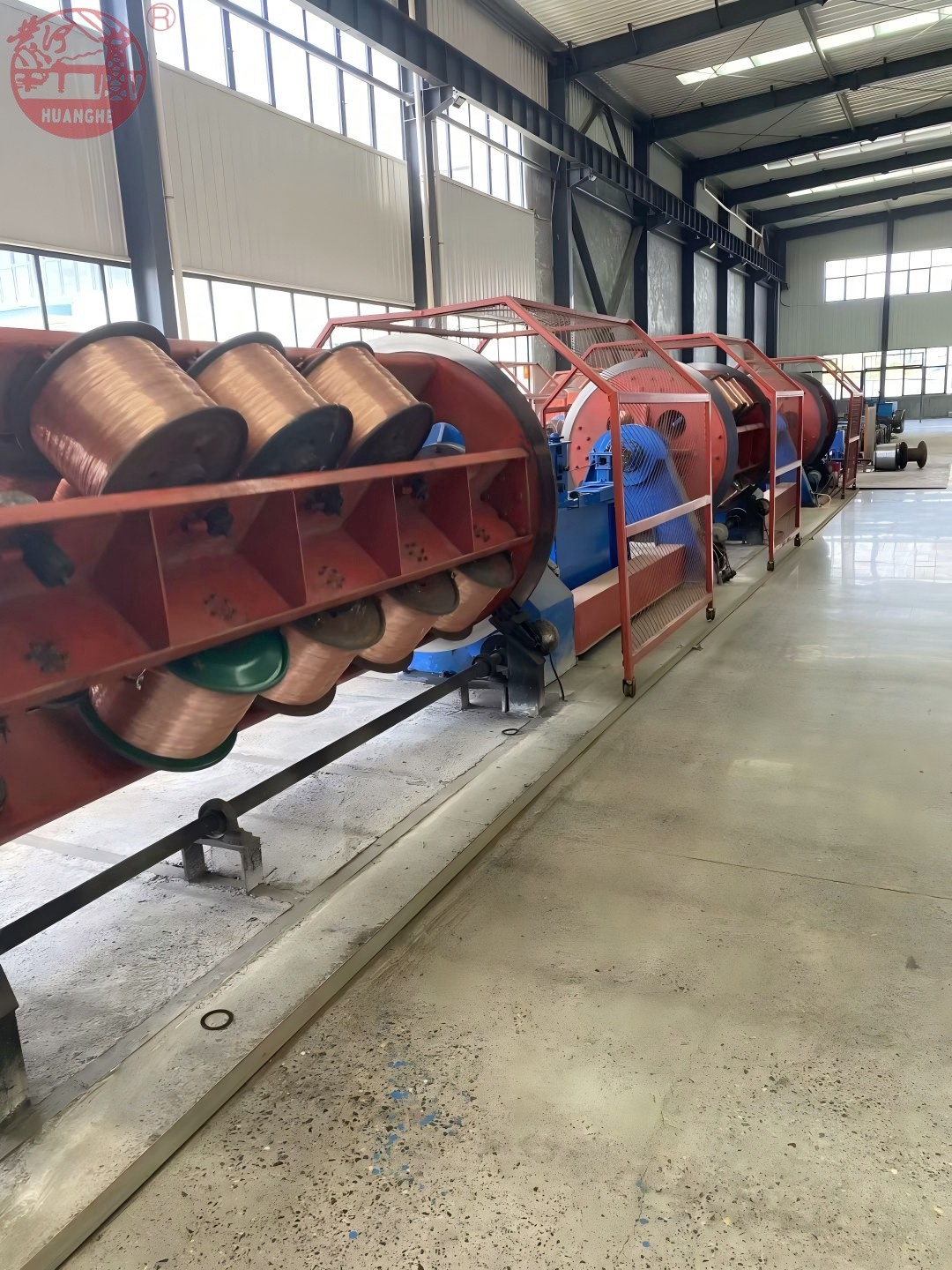
Industrial copper conductor stranding machine used in 11kV XLPE cable production.
For medium voltage cable insulation, ask whether the manufacturer uses an appropriate triple-extrusion process and what controls are in place to maintain insulation quality.
5.3 Review Quality Control and Testing Capabilities
A reliable manufacturer should have suitable testing equipment and documented inspection procedures.
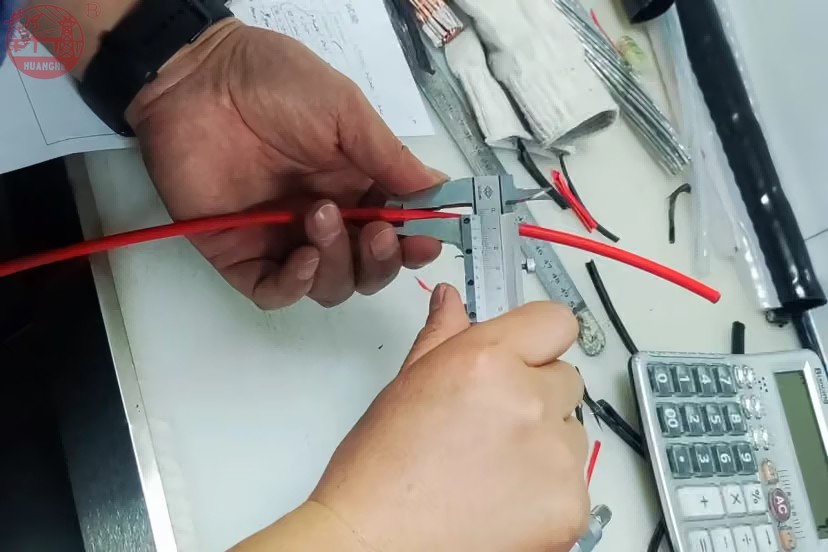
Medium voltage cable testing laboratory and insulation measurement equipment at Huanghe Cable Group.
Depending on the cable design and applicable standard, testing may include:
Buyers should ask which tests are conducted in-house and which are performed by external accredited laboratories.
For project procurement, request sample test reports and confirm whether the manufacturer can provide the required routine test documentation for the actual order.
5.4 Check Type-Test Reports
Type-test reports are important evidence when evaluating medium voltage cable designs.
Ask the manufacturer for reports relevant to:
·Voltage rating.
·Cable construction.
·Conductor material.
·Insulation system.
·Applicable standard.
Check the testing laboratory, report date, cable specification and test scope.
Do not assume that a report for one cable construction automatically covers every other design.
5.5 Evaluate Export Experience
A manufacturer with international project experience may be more familiar with export packaging, shipping documentation and technical communication.
Ask whether the supplier has experience serving your target market.
For example:
·African utility and infrastructure projects.
·Middle Eastern industrial developments.
·Southeast Asian power distribution projects.
·South Asian electricity transmission projects.
You can also ask for relevant project references where disclosure is permitted.
5.6 Compare Technical and Commercial Service
The manufacturer's service capability is also important.
A professional supplier should be able to:
·Review customer specifications.
·Clarify missing technical information.
·Prepare detailed quotations.
·Provide technical datasheets.
·Confirm production schedules.
·Coordinate inspection requirements.
·Arrange export packaging and shipment.
Choosing a supplier based only on the lowest price can create unnecessary technical and commercial risks.
6. What Determines the Price of 11kV Cables in China?
Price is one of the most important considerations for international buyers.
However, there is no single fixed price for 11kV cable because different designs can have significantly different material and manufacturing costs.
The following factors have the greatest influence on quotations.
6.1 Copper and Aluminium Prices
Conductor material is a major cost component.
Copper prices fluctuate with international metal market conditions, while aluminium prices also change according to market supply and demand.
For this reason, quotations for copper and aluminium cables may have different validity periods.
When requesting prices, confirm:
·The metal price basis.
·Quotation validity.
·Whether the price is fixed or subject to adjustment.
·The quantity covered by the quotation.
6.2 Conductor Size and Material
Larger conductor cross-sections require more raw material.
For the same conductor size, copper and aluminium cable prices can differ considerably.
6.3 Cable Construction
The following design choices affect manufacturing costs:
·Single-core or three-core.
·Copper or aluminium conductor.
·XLPE insulation.
·Copper wire or tape screening.
·SWA or STA armouring.
·PVC, MDPE or HDPE outer sheath.
A cable with additional screening or armouring may require more materials and manufacturing operations.
6.4 Order Quantity
Order quantity can influence production efficiency, material purchasing and manufacturing scheduling.
A larger order may offer better production economics, depending on the cable specification and factory capacity.
However, MOQ requirements vary by manufacturer and cable construction.
6.5 Packaging and Shipping
Cable drum dimensions, total cargo weight and destination port also influence the final delivered cost.
When comparing quotations, make sure that all suppliers are quoting under the same Incoterms and shipping conditions.
6.6 How to Compare Different Supplier Quotations
For a fair comparison, use the following checklist:
Comparing identical specifications helps buyers understand whether a lower quotation represents genuine cost competitiveness or simply a different cable design.
7. MOQ, Production Lead Time and Payment Terms
Commercial conditions should be clarified before order confirmation.
7.1 Minimum Order Quantity (MOQ)
MOQ depends on:
·Conductor size.
·Conductor material.
·Cable construction.
·Production line requirements.
·Raw material availability.
·Manufacturing setup costs.
Some standard cable specifications can be produced in relatively small quantities, while customized designs may require larger production runs.
Always confirm the MOQ for each cable specification rather than assuming that all cable sizes have the same minimum order quantity.
7.2 Production Lead Time
Production lead time depends on order quantity, specification complexity, raw material availability and factory scheduling.
For common standard specifications, a reference production period may be approximately 10–15 working days after the required order confirmation and deposit.
Special constructions or large-volume orders may require additional time.
Importantly, production time is separate from international shipping and destination port handling.
7.3 Payment Terms
Common international payment arrangements include:
·T/T (Telegraphic Transfer).
·L/C at sight.
·D/P at sight, where mutually agreed.
The actual payment terms depend on the manufacturer, order value, buyer's creditworthiness and commercial agreement.
Before transferring payment, buyers should verify the supplier's company information, bank beneficiary details and signed commercial documents.
8. How to Import 11kV Cables from China: Step-by-Step Guide
Once the supplier has been selected, the next step is to coordinate the purchase and shipment.
The following process provides a practical framework for overseas buyers.
Step 1: Send a Complete Cable Inquiry
Provide the manufacturer with:
·Voltage rating.
·Conductor material.
·Number of cores.
·Conductor size.
·Insulation material.
·Metallic screen requirements.
·Armouring type.
·Outer sheath material.
·Applicable standard.
·Required quantity.
·Destination port.
If your project has a technical specification or BOQ, sending the original document can help the manufacturer review the requirements more accurately.
Step 2: Receive and Review the Quotation
Request a formal quotation with:
·Unit price.
·Total price.
·Cable specification.
·MOQ.
·Production lead time.
·Payment terms.
·Quotation validity.
·Incoterm.
If you need CIF pricing, provide the destination port so the manufacturer can coordinate freight costs.
Step 3: Confirm Technical Documents
Before confirming the order, review the technical datasheet and relevant quality documents.
Make sure that the offered cable meets the project requirements.
Clarify any differences before production begins.
Step 4: Confirm the Purchase Order and Payment
After technical and commercial agreement, the buyer and manufacturer can proceed with the sales contract and proforma invoice.
Production scheduling normally begins after the agreed order confirmation and payment conditions are fulfilled.
Step 5: Manufacturing and Inspection
The factory manufactures the cables according to the confirmed specifications.
If required, the buyer can arrange factory inspection or third-party inspection.
Routine testing and other agreed inspections should be completed before shipment.
Step 6: Cable Drum Packing and Container Loading
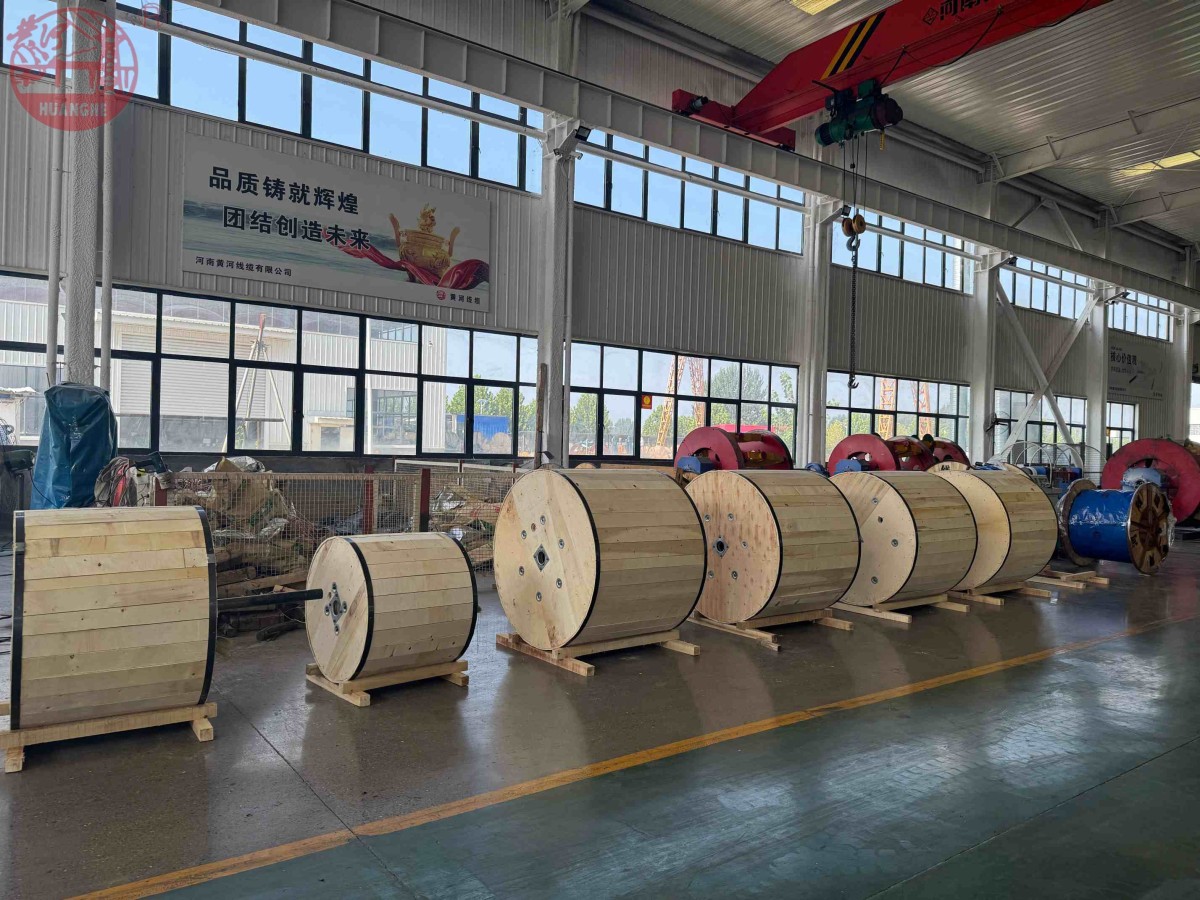
Finished medium voltage power cable drums prepared for container loading and international export.
Cable drums are selected according to cable diameter, cable length, total weight and transportation requirements.
Depending on cargo dimensions and weight, shipments may use:
·20-foot containers.
·40-foot containers.
·Other suitable transport arrangements.
The loading plan should be confirmed before shipment.
Step 7: International Shipping and Documentation
Common export documents include:
·Commercial Invoice.
·Packing List.
·Bill of Lading.
·Certificate of Origin.
·Routine Test Reports.
·Other project-specific certificates and documents.
Shipping terms may include FOB, CFR or CIF.
The buyer should confirm freight charges, shipping schedules and destination requirements before shipment.
9. Why Choose Huanghe Cable Group as Your 11kV Cable Manufacturer in China?
When sourcing medium voltage cables, buyers need a manufacturer that can understand technical requirements, coordinate production and support international procurement.
Henan Huanghe Cable Co., Ltd. (Huanghe Cable Group) is a professional cable manufacturer located in Xinxiang, Henan Province, China.
With more than 45 years of manufacturing history, we serve customers in different international markets with a range of cable products and manufacturing solutions.
Our Manufacturing Capabilities
Our manufacturing profile includes:
·45+ years of production history.
·60 production lines.
·45 dedicated testing machines.
·Copper and aluminium conductor cable manufacturing.
·Medium and low voltage power cable production.
·Different cable insulation, screening and armouring configurations.
·International export experience.
Quality Management and Certifications
Our company quality management and certification profile includes:
·ISO 9001.
·ISO 14001.
·CCC.
·IEC CB Scheme.
The applicable product standards and certification documentation are confirmed according to the cable specification and project requirements.
11kV Cable Products and Customization
Huanghe Cable Group supports different medium voltage cable requirements, including:
·11kV copper conductor XLPE cables.
·11kV aluminium conductor XLPE cables.
·Single-core medium voltage cables.
·Three-core medium voltage cables.
·SWA armoured power cables.
·STA armoured power cables.
·Unarmoured XLPE power cables.
·Customized sheath and screening configurations.
Our team can review customer specifications and help clarify technical details before preparing a quotation.
International Project Supply Experience
Our previous supply experience includes:
Kenya – National Grid Interconnection
More than 120 km of 33kV and 11kV XLPE transmission cable supplied for a national grid interconnection project.
Botswana – Power Station Expansion
11kV XLPE/SWA 3 × 185 mm² cable supplied for a power station expansion project.
Bangladesh – Power Distribution Projects
Long-term supply experience involving power cables, aerial bundled cables and bare conductors for Bangladesh power distribution projects.
These projects reflect our experience in supporting international infrastructure and electrical power distribution requirements.
Factory Location and Export Support
Our manufacturing facility is located at:
Heyu Road, Weibei Industrial Park, Fengquan District, Xinxiang City, Henan Province, China.
We welcome qualified customers and project representatives to discuss their cable requirements and arrange factory visits by appointment.
Our team provides support with technical clarification, quotations, production coordination and export arrangements.
10. Frequently Asked Questions About Buying 11kV Cables from China
Q1. How do I find reliable 11kV cable manufacturers in China?
Start by checking the company's manufacturing facilities, production equipment, quality certifications, product test reports and export experience.
Whenever possible, arrange a factory visit or independent inspection.
Q2. What is the most common standard for 11kV XLPE cables?
IEC 60502-2 is widely referenced for medium voltage extruded-insulation power cables.
Other standards may apply depending on the destination market and project requirements.
Q3. Can Chinese manufacturers produce customized 11kV cables?
Many established manufacturers offer customized constructions based on conductor material, cable size, insulation, metallic screen, armouring and outer sheath requirements.
Confirm manufacturing availability and technical compliance before ordering.
Q4. What is the difference between copper and aluminium 11kV cables?
Copper has higher electrical conductivity and is generally heavier and more expensive.
Aluminium is lighter and generally more economical, but requires appropriate conductor sizing.
Q5. What documents should I request before purchasing 11kV cables?
Depending on the project, request:
·Company certification documents.
·Product datasheets.
·Relevant type-test reports.
·Applicable routine test documentation.
·Material information.
·Commercial quotation.
·Packing and shipping information.
Q6. How long does 11kV cable production take in China?
For common specifications, production may take approximately 10–15 working days, depending on order quantity and factory scheduling.
Customized designs and large orders may require additional time.
Q7. Can I order a small quantity of 11kV cable?
This depends on the cable specification, production setup and manufacturer's MOQ policy.
Contact the manufacturer with your required sizes and quantities to confirm availability.
Q8. Can I request CIF pricing from a Chinese cable manufacturer?
Yes. Provide the destination port and shipment details so the manufacturer can obtain the relevant freight quotation and calculate the CIF price.
Q9. How can I verify the quality of 11kV cables before shipment?
Review the approved datasheet, relevant type-test documentation and routine test results.
You can also arrange a factory inspection or independent third-party inspection before shipment.
Q10. Can I visit Huanghe Cable Group's factory before placing an order?
Yes. International customers can contact our sales team to discuss their requirements and arrange a factory visit in advance.
A factory visit provides an opportunity to understand the manufacturing facilities, production processes and quality inspection arrangements.
Conclusion: Choose the Right 11kV Cable Manufacturing Partner
Sourcing 11kV medium voltage cables from China can provide international buyers with access to a wide range of manufacturing capabilities and cable configurations.
However, successful procurement requires careful supplier evaluation.
Before placing an order, compare technical specifications, manufacturing capabilities, quality documentation, production schedules, commercial terms and export experience.
The right manufacturer should offer more than a competitive quotation. It should understand your project requirements and provide reliable support throughout the purchasing process.
Huanghe Cable Group is committed to providing professional cable manufacturing and export services for international customers.
Whether you are purchasing 11kV copper XLPE cables, aluminium conductor power cables, SWA armoured cables or customized medium voltage cable solutions, our team is ready to discuss your requirements.
Looking for a Reliable 11kV Cable Manufacturer in China?
Contact Huanghe Cable Group today.
Send us your:
·Cable specifications.
·Required quantities.
·Applicable standards.
·Destination port.
·Project requirements.
Our team will review your inquiry and provide a quotation based on your technical and commercial requirements.
Huanghe Cable Group – Your Cable Manufacturing Partner in China.
Website: https://www.hihuanghecable.com
Contact our team today for your 11kV medium voltage cable quotation.