

News
A Complete Procurement Guide for EPC Contractors, Utility Procurement Teams, Electrical Wholesalers and International Engineering Projects
Sourcing XLPE power cables from China can offer international buyers access to a broad manufacturing supply chain, competitive pricing, flexible product configurations and large-scale production capacity. Chinese cable manufacturers supply low-voltage (LV) and medium-voltage (MV) XLPE power cables for power distribution, industrial construction, substations, infrastructure and underground engineering projects worldwide.
However, successful procurement involves more than comparing prices. Buyers must understand cable specifications, raw material price fluctuations, applicable international standards, supplier qualifications, payment arrangements and international shipping procedures.
Incomplete RFQs, unclear technical requirements and insufficient supplier verification can result in inaccurate quotations, unexpected costs, production delays and disputes during order execution.
This comprehensive guide from Huanghe Cable Group explains how to source XLPE power cables from China, obtain accurate FOB quotations, evaluate manufacturers, manage production inspections and organize international shipments efficiently.
1. Why Source XLPE Power Cables from China?
China has developed a comprehensive cable manufacturing industry, supported by raw material suppliers, conductor processing facilities, insulation material manufacturers, cable production equipment suppliers and testing services.
For international buyers, sourcing directly from qualified Chinese cable manufacturers can provide several advantages.
1.1 Competitive Manufacturing Costs
China's established cable manufacturing supply chain allows manufacturers to source copper, aluminum, XLPE insulation materials, steel armouring materials and cable accessories through a mature industrial network.
Factory-direct procurement may help buyers reduce intermediary costs and improve purchasing efficiency.
Actual savings depend on conductor materials, cable specifications, order quantities, raw material prices, production requirements and shipping arrangements.
1.2 Flexible Cable Configurations
Chinese manufacturers can produce different XLPE power cable configurations according to project requirements, including:
·Conductor materials: Copper or aluminum.
·Voltage ratings: 0.6/1 kV and various medium-voltage ratings.
·Core configurations: Single-core, two-core, three-core, four-core and other customized arrangements.
·Insulation: Cross-linked polyethylene (XLPE).
·Armouring: Unarmoured, steel wire armoured (SWA), steel tape armoured (STA) and other specified constructions.
·Outer sheath: PVC, PE, LSZH and other specified sheath materials.
These configurations can be selected for underground cable networks, industrial facilities, power distribution systems, substations, cable trenches and other engineering applications.
1.3 International Standards and Quality Requirements
Depending on the cable design and project specifications, XLPE power cables can be manufactured in accordance with recognized standards, including:
·IEC 60502-1: Power cables with extruded insulation and their accessories for rated voltages from 1 kV (Um = 1.2 kV) up to 3 kV (Um = 3.6 kV).
·IEC 60502-2: Power cables with extruded insulation for rated voltages from 6 kV (Um = 7.2 kV) up to 30 kV (Um = 36 kV).
·BS 5467: Specification for thermosetting insulated, armoured cables for specified power applications.
·Relevant GB/T standards and other project-specific requirements.
Buyers should always confirm the applicable standard, voltage rating, conductor class and cable construction before placing an order.
1.4 Excellent Electrical and Thermal Performance
XLPE insulation offers several advantages over conventional PVC insulation for power cable applications.
Typical advantages include:
·A normal maximum conductor operating temperature of 90°C for many standard XLPE power cable designs.
·A short-circuit conductor temperature of up to 250°C under specified conditions, commonly for a maximum duration of 5 seconds.
·Good electrical insulation properties.
·Good resistance to thermal aging.
·Good mechanical and chemical performance when properly designed and installed.
The actual temperature limits and performance requirements must be confirmed against the relevant cable standard and manufacturer specifications.
2. Key RFQ Requirements for Accurate XLPE Cable Quotations
An accurate Request for Quotation (RFQ) is the first step toward obtaining competitive and comparable offers from Chinese cable manufacturers.
Incomplete inquiries often require repeated technical clarification, which can delay quotations and create differences between suppliers' proposed cable constructions.
Before requesting an FOB quotation, buyers should prepare the following information.
2.1 Voltage Rating
Clearly specify the cable's rated voltage.
Common examples include:
The required voltage rating must match the electrical system design and applicable standard.
2.2 Conductor Material and Cross-Sectional Area
Specify whether the conductor is copper or aluminum.
Also identify the required cross-sectional area, preferably in mm².
Examples:
·1 × 240 mm² Copper
·3 × 185 mm² Copper
·4 × 95 mm² Aluminum
·3 × 185 + 1 × 95 mm² Copper
If conductor flexibility or stranding requirements are important, specify the conductor class according to IEC 60228 or the relevant project standard.
2.3 Number of Cores and Cable Construction
Clearly indicate the number of cores and the required cable structure.
For example:
·Single-core XLPE cable.
·Three-core XLPE cable.
·Four-core XLPE cable.
·Unarmoured XLPE cable.
·SWA XLPE cable.
·STA XLPE cable.
For medium-voltage cables, also clarify whether metallic screens, semiconductive layers and other specific construction requirements are necessary.
2.4 Insulation and Outer Sheath
Specify the required insulation and sheath materials.
Common configurations include:
·XLPE insulation with PVC outer sheath.
·XLPE insulation with PE outer sheath.
·XLPE insulation with LSZH outer sheath.
If the cable is intended for underground installation, outdoor exposure, tunnels or industrial environments, specify relevant requirements such as UV resistance, water resistance, flame retardancy or termite protection.
Do not assume that every XLPE cable automatically includes an outer sheath of a particular material.
2.5 Applicable Standards
Identify the required manufacturing and testing standards.
Common examples include:
·IEC 60502.
·IEC 60228.
·IEC 60332.
·BS 5467.
·GB/T standards.
·Project-specific technical specifications.
If the project requires third-party inspection, type-test reports or specific certificates, mention these requirements in the original RFQ.
2.6 Order Quantity and Drum Requirements
Specify the total order quantity and preferred delivery lengths.
For example:
·Total quantity: 10,000 meters.
·Standard drum length: 500 meters.
·Delivery arrangement: 20 drums.
·Required drum type: Wooden or steel drums.
Actual drum lengths should be confirmed with the manufacturer according to cable diameter, drum dimensions, weight and transportation restrictions.
2.7 Trade Terms and Destination Port
Clearly indicate your preferred trade term:
·EXW: Ex Works.
·FOB: Free on Board.
·CFR: Cost and Freight.
·CIF: Cost, Insurance and Freight.
·DAP: Delivered at Place.
·DDP: Delivered Duty Paid.
For FOB quotations, specify the requested Chinese loading port, such as Qingdao, Shanghai, Ningbo or Tianjin.
For CIF or CFR quotations, provide the destination port and country.
Practical RFQ Tip: The more complete your technical specifications are, the easier it is for manufacturers to calculate accurate prices and avoid repeated clarification.
3. FOB XLPE Power Cable Pricing: Cost Breakdown
FOB pricing is one of the most frequently requested quotation methods when purchasing XLPE power cables from China.
However, buyers should understand how cable manufacturing costs are calculated and which expenses are included in the agreed FOB price.
3.1 Main Factors Affecting XLPE Cable Prices
Unlike many standard industrial products, power cable prices are strongly influenced by metal market fluctuations.
The main cost components include:
1. Conductor Material
Copper and aluminum are usually among the most significant cost components.
Copper prices are commonly referenced against the London Metal Exchange (LME), while aluminum prices are influenced by relevant metal market benchmarks.
Manufacturers may also consider local metal market prices, conversion costs, exchange rates and procurement premiums.
2. Insulation and Sheath Materials
The cost of XLPE insulation, PVC, PE, LSZH and other polymer materials affects the final cable price.
Different material grades and performance requirements can result in different production costs.
3. Armouring Materials
Steel wire, steel tape and other armouring materials increase the overall cable weight and manufacturing costs.
4. Manufacturing and Testing
Production costs include conductor processing, insulation extrusion, cabling, armouring, sheathing and applicable quality testing.
5. Packaging and Transportation
Cable drums, protective packaging, inland transportation and export-related expenses also contribute to the final quotation.
3.2 What Is Normally Included in an FOB Quotation?
Under FOB Incoterms® 2020, the seller is generally responsible for:
·Manufacturing the agreed cable products.
·Providing the agreed packaging.
·Transporting the goods to the named loading port as arranged under the contract.
·Completing export customs clearance.
·Delivering the goods on board the buyer's nominated vessel.
The seller and buyer should clearly agree on any additional handling, terminal and port-related charges.
3.3 What Is Normally Excluded from an FOB Quotation?
The buyer is generally responsible for:
·International ocean freight.
·Marine cargo insurance, if required.
·Destination port charges.
·Import customs clearance.
·Import duties and local taxes.
·Destination inland transportation.
·Other charges allocated to the buyer under the agreed shipping arrangements.
The exact allocation of costs should follow the named FOB port and Incoterms® 2020.
3.4 How Long Is an XLPE Cable Quotation Valid?
Copper and aluminum prices can fluctuate during the procurement process.
Consequently, cable manufacturers may provide quotations with limited validity periods.
For example, a manufacturer may offer a quotation valid for 7 days, depending on raw material market conditions.
For large-volume orders, buyers can discuss:
·Fixed-price agreements.
·Metal price adjustment mechanisms.
·Quotation validity extensions.
·Agreed raw material price reference dates.
Important: Always confirm the quotation validity period before issuing a purchase order. A quotation should clearly indicate whether its price is fixed or subject to metal price adjustments.
4. FOB vs. CIF: Which Is Better for XLPE Cable Procurement?
Both FOB and CIF are commonly used in international cable trading.
The best option depends on the buyer's shipping experience, freight arrangements and overall procurement strategy.
FOB Advantages
FOB is suitable for buyers who:
·Have established international freight forwarders.
·Regularly import cables from China.
·Want to compare shipping rates independently.
·Prefer greater control over vessel schedules.
·Purchase multiple products from different manufacturers.
CIF Advantages
CIF may be more convenient for buyers who:
·Do not have an established freight forwarder.
·Prefer the seller to arrange ocean transportation.
·Want to receive a quotation that includes freight and minimum insurance.
·Need simplified coordination with the supplier.
Recommendation: For experienced EPC contractors and regular cable importers, FOB can offer greater flexibility in freight selection. For new buyers, CIF may simplify the initial shipping arrangements.
Remember that under both terms, risk transfers when the goods are loaded on board the vessel at the port of shipment. CIF does not mean that the seller bears the transportation risk until the destination port.
5. How to Verify a Reliable XLPE Cable Manufacturer in China
Selecting the right manufacturer is just as important as obtaining a competitive quotation.
China has both genuine cable manufacturers and trading companies. Both can participate in international trade, but buyers should understand who actually manufactures the products and who is responsible for quality control.
The following checklist can help reduce procurement risks.
5.1 Verify Actual Manufacturing Facilities
Ask the supplier to provide:
·Factory photographs and production videos.
·Manufacturing facility information.
·Production equipment details.
·Conductor processing capabilities.
·XLPE insulation extrusion capabilities.
·Armouring and sheathing equipment.
·Quality inspection facilities.
For medium-voltage XLPE cable production, ask about the relevant continuous vulcanization or cross-linking production equipment, including CCV lines where applicable.
Not every manufacturer needs identical equipment; production capability should match the cable specifications being purchased.
5.2 Check Product Testing Reports
Request technical documentation relevant to the cable design.
Important documents may include:
·Routine test reports.
·Sample test reports.
·Type-test reports.
·Conductor test reports.
·Insulation and sheath test results.
·Third-party inspection reports, where required.
A type-test report should be checked against the relevant cable design, voltage rating, conductor configuration and applicable standard.
A generic report does not automatically prove that every customized cable meets the same requirements.
5.3 Verify Management System Certifications
Buyers may request relevant management system certifications, such as:
·ISO 9001 – Quality Management Systems.
·ISO 14001 – Environmental Management Systems.
·ISO 45001 – Occupational Health and Safety Management Systems.
Check the certification scope, issuing organization, validity and certified company name.
Remember that ISO certification is not a substitute for product-specific testing.
5.4 Evaluate International Export Experience
A manufacturer with international export experience may be more familiar with:
·Export packaging requirements.
·Cable drum marking.
·Commercial invoices and packing lists.
·Certificate of Origin procedures.
·Shipping documentation.
·International customer communication.
Buyers can also request references or relevant project experience, subject to confidentiality restrictions.
5.5 Confirm Technical and Commercial Support
A professional supplier should be able to:
·Review customer cable specifications.
·Identify missing technical information.
·Recommend suitable cable constructions.
·Provide detailed quotations.
·Supply technical datasheets.
·Coordinate production and inspections.
·Assist with export documentation.
A manufacturer that understands both technical requirements and international procurement procedures can help reduce communication problems throughout the project.
6. Payment Terms, Production and Quality Inspection
Once the cable specifications and quotation are confirmed, the next step is to agree on payment, production and inspection arrangements.
6.1 Common Payment Terms
For new international business relationships, a commonly negotiated payment arrangement is:
30% T/T deposit after order confirmation and 70% balance before shipment.
Other arrangements may include:
·100% T/T advance payment.
·Letter of Credit (L/C), subject to bank and contract conditions.
·D/P at sight.
·Other mutually agreed payment arrangements.
Payment terms depend on the buyer's creditworthiness, order value, banking arrangements and supplier policy.
Buyers should confirm the payment schedule, production start date and balance payment conditions in the sales contract or proforma invoice.
6.2 Production Lead Time
Production time depends on:
·Cable voltage rating.
·Conductor material.
·Cable construction.
·Order quantity.
·Raw material availability.
·Factory production schedules.
·Testing and inspection requirements.
For planning purposes, some standard low-voltage cable orders may require approximately 15–25 working days.
Medium-voltage, customized or large-volume orders may require additional time.
Always obtain a confirmed production schedule from the manufacturer before finalizing project delivery commitments.
6.3 Three Important Inspection Stages
To ensure that delivered products comply with the purchase order, buyers can arrange inspections at different production stages.
Stage 1: Raw Material Inspection
Check relevant raw materials, including:
·Copper or aluminum conductors.
·XLPE insulation compounds.
·PVC or PE sheath compounds.
·Steel tapes or steel wires.
·Other specified cable materials.
Stage 2: Production Inspection
Depending on the order and inspection agreement, buyers may check:
·Conductor dimensions and resistance.
·Insulation thickness.
·Cable construction.
·Armouring dimensions.
·Outer sheath thickness.
·Production identification and traceability.
For medium-voltage cables, relevant electrical and dimensional checks should follow the agreed inspection plan.
Stage 3: Final Pre-Shipment Inspection
Before shipment, verify:
·Cable model and voltage rating.
·Conductor material and cross-sectional area.
·Number of cores.
·Cable length.
·Outer sheath condition.
·Cable drum condition.
·Drum markings.
·Packing list consistency.
·Required factory test reports.
Third-party inspections can be arranged through organizations such as SGS or Bureau Veritas when specified in the contract.
6.4 Cable Drum Marking Requirements
Each cable drum should have clear and readable identification.
Typical information includes:
·Manufacturer name.
·Cable type and model.
·Rated voltage.
·Conductor material.
·Number of cores and cross-sectional area.
·Cable length.
·Applicable standard.
·Production batch number.
·Drum number.
·Manufacturing date.
Accurate drum marking helps buyers manage warehouse inventory, installation planning and project traceability.
7. XLPE Power Cable Shipping from China
International transportation is an important part of cable procurement because cable drums can be large, heavy and difficult to handle.
Under FOB arrangements, the buyer normally nominates the freight forwarder and arranges the main sea transportation.
The seller completes the agreed export responsibilities and delivers the goods on board the nominated vessel.
7.1 FCL vs. LCL Shipping
Buyers generally choose between two shipping methods.
FCL – Full Container Load
FCL means the shipment uses an entire container.
Advantages include:
·Better control over cargo handling.
·Reduced cargo handling by unrelated parties.
·More convenient loading arrangements for large cable drums.
·Suitable for medium and large project orders.
LCL – Less than Container Load
LCL means the cargo shares container space with other shipments.
Advantages include:
·Suitable for relatively small orders.
·No need to purchase an entire container.
·Can be practical for samples or smaller cable quantities.
However, LCL cargo may require additional consolidation and handling, and cable drum dimensions must be compatible with the logistics provider's requirements.
7.2 Common Container Types
<Insert image: 20ft standard container and 40ft high-cube container>
Common container options include:
·20GP: 20-foot general-purpose container.
·40GP: 40-foot general-purpose container.
·40HQ: 40-foot high-cube container.
The appropriate container depends on cable drum diameter, drum width, gross weight, total volume and loading arrangement.
7.3 How Much XLPE Cable Can a Container Carry?
There is no universal loading quantity for XLPE cables.
The actual loading capacity depends on:
·Container maximum payload.
·Container tare weight.
·Cable drum dimensions.
·Individual drum weight.
·Number of drums.
·Loading configuration.
·Road transportation and shipping line restrictions.
Do not calculate container loading capacity based only on a general tonnage estimate.
Ask the manufacturer to prepare a packing list with the following information:
The freight forwarder should confirm the final loading plan and weight restrictions before shipment.
7.4 Cable Drum Protection During Transportation
Proper cable drum protection is essential for preventing damage during loading, transportation and unloading.
Common protective measures include:
·Using suitable wooden or steel drums.
·Protecting cable ends against moisture.
·Securing cable ends to prevent loosening.
·Using appropriate drum flanges and supports.
·Securing drums with suitable belts and wooden chocks.
·Preventing drum movement during sea transportation.
Wood packaging used for international shipments should comply with applicable ISPM 15 requirements.
The packaging method should be selected according to cable size, drum weight, destination requirements and shipping conditions.
8. Export Documents Required for XLPE Cable Shipments
Correct export documentation helps ensure smooth customs clearance and delivery.
The documents commonly required for international XLPE cable shipments include:
8.1 Commercial Invoice
Contains the seller's and buyer's information, product descriptions, quantities, unit prices, total value and agreed trade terms.
8.2 Packing List
Provides detailed information about:
·Cable models.
·Drum quantities.
·Individual cable lengths.
·Net and gross weights.
·Drum dimensions.
·Total shipment volume.
8.3 Factory Test Reports
Factory test reports provide evidence of the tests performed on the manufactured cables.
The applicable reports should match the purchased cable specifications and contractual requirements.
8.4 Certificate of Origin (CO)
A Certificate of Origin identifies the country of origin of the exported products.
Some destinations or trade arrangements may require a specific certificate format.
8.5 Form E Certificate
Form E may be applicable to eligible goods traded under the ASEAN-China Free Trade Area framework.
Its availability depends on the applicable origin rules, product eligibility and destination requirements.
It should not be assumed that every shipment qualifies.
8.6 Bill of Lading (B/L)
The Bill of Lading is an important shipping document issued by the carrier or its authorized agent.
It provides details such as:
·Shipper.
·Consignee.
·Notify party.
·Port of loading.
·Port of discharge.
·Cargo description.
·Container information.
Buyers should confirm document requirements with their customs broker or freight forwarder before shipment.
9. How to Calculate the Total Landed Cost of XLPE Power Cables
The FOB price is only one part of the total procurement cost.
To calculate the actual cost of importing XLPE power cables, buyers should consider all expenses from the Chinese factory to the final delivery location.
Landed Cost Formula:
Total Landed Cost = FOB Value + Ocean Freight + Insurance + Destination Port Charges + Import Duties + Local Taxes + Customs Clearance + Inland Transportation
For example, consider a hypothetical cable purchase:
This is an illustrative calculation only. Actual costs and tax calculations depend on the destination country, customs valuation rules and shipping arrangements.
For large EPC projects, comparing the total landed cost is more meaningful than comparing factory FOB prices alone.
10. Common Mistakes to Avoid When Sourcing XLPE Cables from China
Even experienced procurement teams can encounter problems when important details are overlooked.
Here are several common mistakes to avoid.
Mistake 1: Providing Incomplete Cable Specifications
A request that only states the conductor size may not provide enough information for an accurate quotation.
Always clarify voltage rating, core number, conductor material, insulation, sheath and applicable standards.
Mistake 2: Choosing a Supplier Based Only on Price
An unusually low quotation may involve different materials, cable constructions, testing arrangements or commercial conditions.
Compare technical specifications and commercial terms before making a purchasing decision.
Mistake 3: Ignoring Copper and Aluminum Price Changes
Metal price fluctuations can affect the final quotation.
Always check quotation validity and confirm the pricing basis before placing an order.
Mistake 4: Confusing Type-Test Reports with Routine Test Reports
These reports serve different purposes.
A type-test report demonstrates that a representative cable design has undergone specified type testing.
A routine test report documents applicable routine tests performed on manufactured cable lengths.
Confirm which documents are required by the project.
Mistake 5: Overlooking Special Environmental Requirements
Projects in tunnels, industrial facilities, coastal areas and underground networks may require additional cable performance characteristics.
Clarify requirements such as:
·Flame retardancy.
·Fire resistance.
·Low smoke emission.
·Halogen-free materials.
·UV resistance.
·Water resistance.
·Chemical resistance.
These properties are not interchangeable and should be specified separately.
Mistake 6: Underestimating Cable Drum Dimensions and Weight
Large cable drums can create loading restrictions even when the total shipment weight appears acceptable.
Always confirm drum dimensions and gross weight before booking the container.
11. Frequently Asked Questions About Sourcing XLPE Power Cables from China
Q1. What is the difference between XLPE and PVC power cables?
XLPE stands for cross-linked polyethylene, while PVC stands for polyvinyl chloride.
XLPE insulation generally offers higher normal conductor operating temperature ratings and different electrical and thermal performance characteristics compared with conventional PVC insulation.
Typical XLPE power cable designs have a 90°C normal maximum conductor operating temperature, while many conventional PVC-insulated power cable designs have a 70°C rating.
The correct choice depends on the electrical system, installation environment and applicable standards.
Q2. How long does it take to manufacture XLPE power cables in China?
Production time depends on cable specifications, order quantity, raw material availability and factory production schedules.
Some standard low-voltage cable orders may take approximately 15–25 working days.
Medium-voltage and customized cable orders may require longer production periods.
Always request a confirmed delivery schedule before placing an order.
Q3. How long is an XLPE power cable quotation valid?
Quotation validity depends largely on copper and aluminum market conditions, material procurement arrangements and manufacturer pricing policies.
Some manufacturers offer a validity period of approximately 7 days.
For large orders, buyers can negotiate fixed-price agreements or metal price adjustment mechanisms.
Q4. Can different cable specifications be loaded into one container?
Yes. Different cable models and sizes can generally be loaded into one container if their packaging dimensions, weights and loading requirements are compatible.
The manufacturer and freight forwarder should prepare a combined loading plan before shipment.
Q5. Can Chinese manufacturers produce LSZH XLPE power cables?
Yes. Manufacturers can produce XLPE power cables with LSZH outer sheaths when the required materials and construction are supported by their production capabilities.
Buyers should specify the required low-smoke and halogen-acid gas performance tests, such as IEC 61034 and IEC 60754, where applicable.
Q6. What is the difference between flame-retardant and fire-resistant cables?
These terms describe different cable performance characteristics.
·Flame-retardant cables: Designed to limit flame propagation under specified test conditions.
·Fire-resistant cables: Designed to maintain circuit integrity for a specified period under defined fire-testing conditions.
IEC 60332 covers flame propagation tests, while IEC 60331 covers electrical circuit integrity under fire conditions for applicable cable types.
A flame-retardant cable should not automatically be described as fire-resistant.
Q7. What documents should I request before placing an order?
Depending on the project, buyers should request:
·Manufacturer company profile.
·Cable technical datasheet.
·Applicable product certificates.
·Relevant type-test reports.
·Sample factory test reports.
·ISO management system certificates.
·Commercial quotation.
·Production and delivery information.
The exact documents should be agreed upon before order confirmation.
Q8. Can I visit a Chinese cable factory before purchasing?
Yes. Buyers can arrange factory visits to inspect manufacturing facilities, production equipment, quality control procedures and cable products.
A factory visit can help establish confidence in the supplier's actual manufacturing capabilities and production management.
12. Why Choose Huanghe Cable Group for Your XLPE Cable Projects?
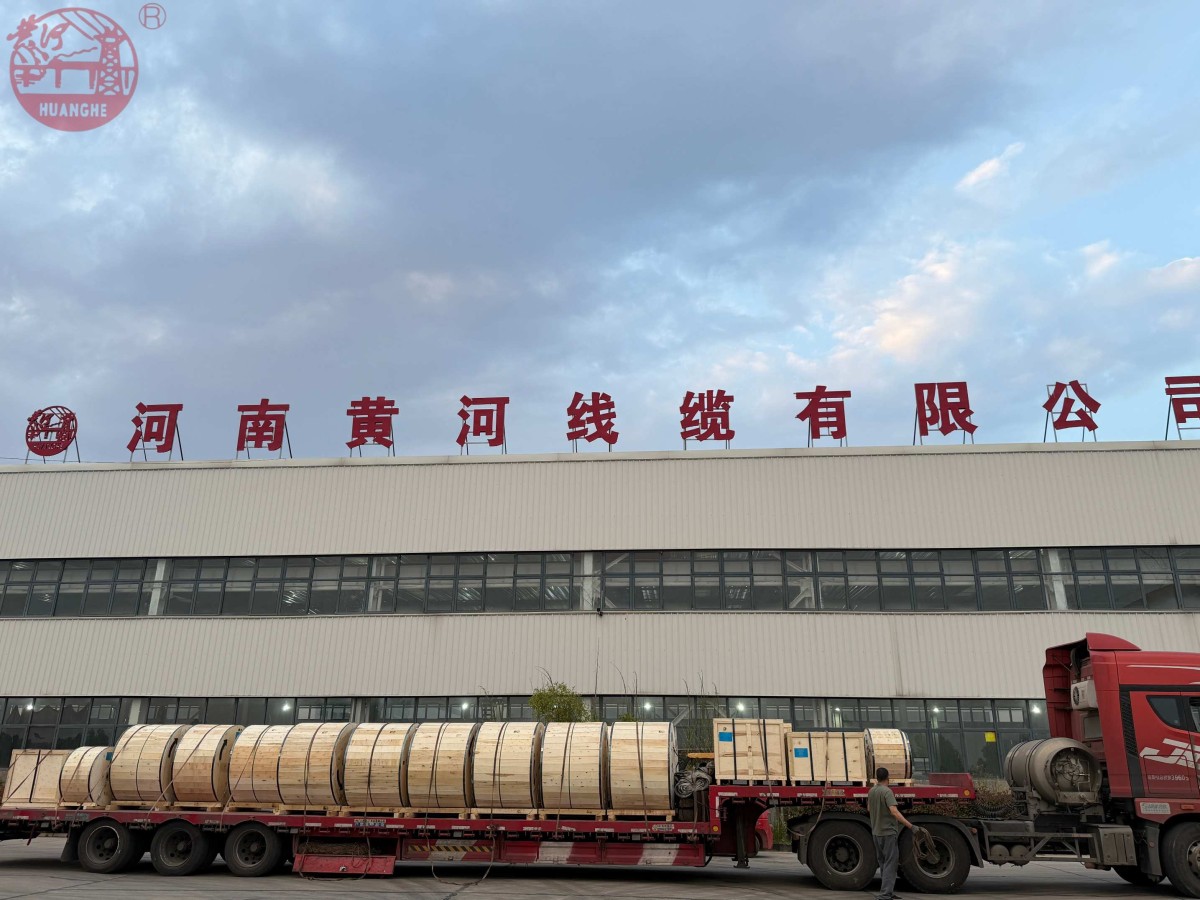
Choosing an experienced cable manufacturer is an important part of successful project procurement.
Huanghe Cable Group is a Chinese cable manufacturer serving international customers across different industries and engineering applications.
We understand that every cable procurement project has different technical specifications, commercial requirements and delivery expectations.
Our team works with international buyers to review cable requirements and provide suitable product solutions.
What Huanghe Cable Group Can Offer
·Customized Cable Solutions: Copper and aluminum conductors, different core configurations, voltage ratings, armouring structures and sheath materials.
·Technical Support: Assistance with reviewing customer specifications, cable structures, applicable standards and technical datasheets.
·Factory Manufacturing: Cable production according to confirmed technical requirements and agreed quality procedures.
·Quality Documentation: Relevant technical documents and available testing records according to product specifications and project requirements.
·International Export Experience: Support with export quotations, packaging coordination, shipping arrangements and export documentation.
·Project Procurement Support: Communication and coordination for EPC contractors, distributors, wholesalers and engineering procurement teams.
Whether you need low-voltage XLPE power cables, medium-voltage armoured cables, copper conductor cables or aluminum conductor cables, Huanghe Cable Group welcomes your inquiry.
Request an FOB Quotation from Huanghe Cable Group
Are you planning to purchase XLPE power cables from China?
Send us your cable specifications, quantities and destination port. Our team can review your requirements and prepare a quotation according to your project needs.
To help us provide an accurate offer, please include:
1.Cable voltage rating.
2.Conductor material and cross-sectional area.
3.Number of cores.
4.Insulation and outer sheath requirements.
5.Applicable international standards.
6.Required quantity and drum length.
7.Preferred trade term and destination port.
Huanghe Cable Group – Your Professional Cable Manufacturing Partner in China.
Contact our team today to discuss your XLPE power cable requirements and request a competitive factory quotation.
Website: https://www.hihuanghecable.com/